
Agrovoltaics: When Solar Panels and Farming Share the Same Land
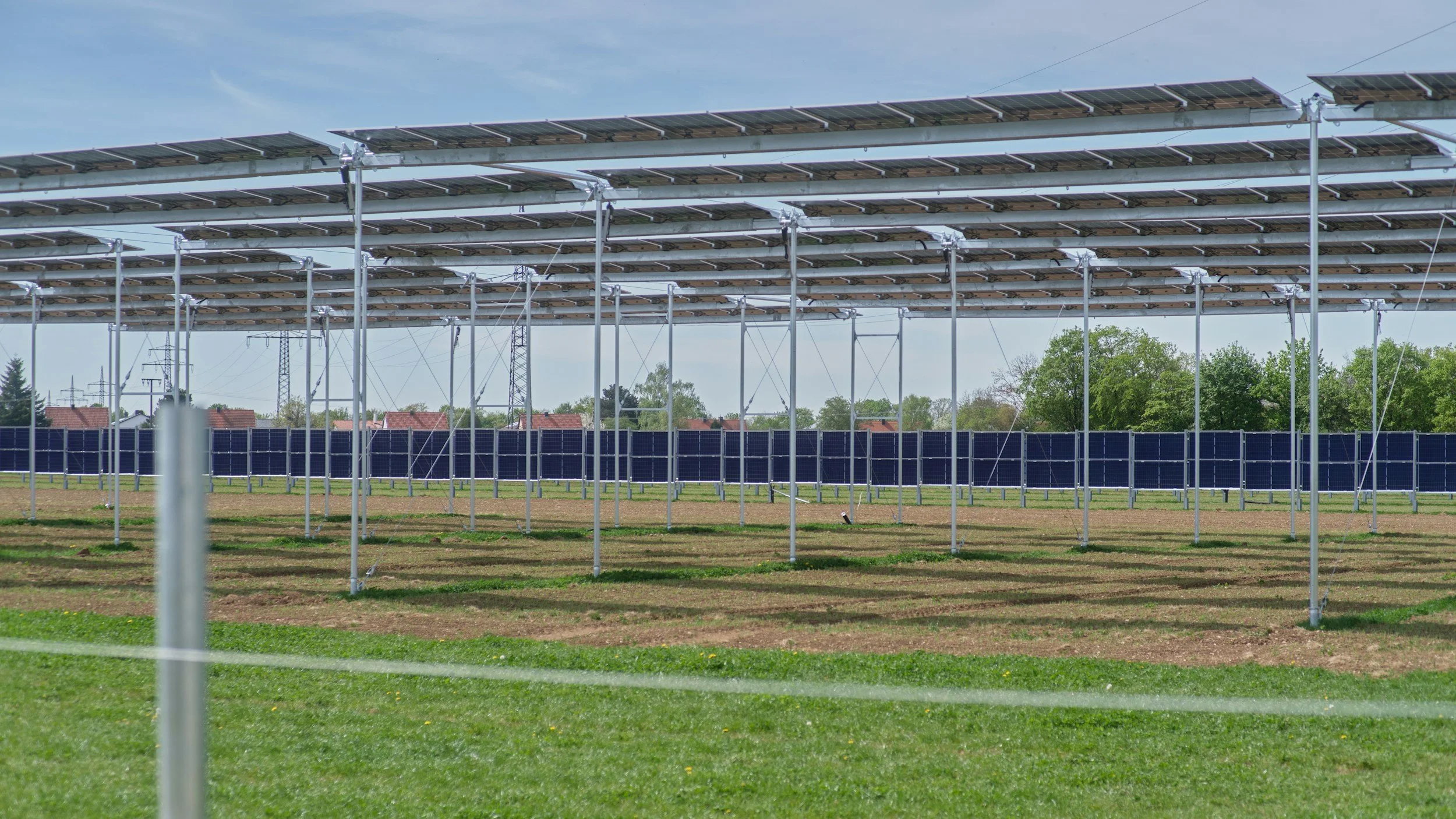
Under a canopy of solar panels at the University of Arizona's Biosphere 2, chiltepin peppers produced roughly three times as much fruit as the same plants grown in open sun. Cherry tomatoes nearby doubled their yield, and the panels kept generating electricity overhead the whole time. The arrangement has a name, agrovoltaics (also called agrivoltaics), and it describes any system where solar energy production and agriculture happen on the same land at the same time. Results like these have made agrovoltaics a popular answer to a growing conflict over where solar should go. The full picture is narrower. Agrovoltaics helps some crops in some climates, and it works best as a way to limit the damage when solar lands on farmland, rather than as a reason to put it there.
Why Solar Keeps Landing on Farmland
Large solar arrays need flat, open, sunny land close to existing power lines. Farmland checks every box, and it usually comes with a single owner willing to sign a long lease. American Farmland Trust projects that, on current trends, 83 percent of new U.S. solar development through 2040 will be built on farmland, with about half of that on the country's most productive agricultural land.
The economics explain most of the pattern. A single large project near a transmission line connects to the grid once and sells power under one contract. That scale makes utility-scale solar far cheaper per unit of electricity than most rooftop systems, according to Lazard's annual cost analyses. Spreading the same output across thousands of rooftops means thousands of owners, roof conditions, and permits. Developers follow the lowest cost, and farmland usually offers it.
Rooftops, Parking Lots, and Disturbed Land
From a land-use standpoint, the built environment is the better place for solar. Panels on a warehouse roof or a parking canopy take no additional land, sit close to where electricity is used, and need little or no new transmission. A 2016 analysis from the National Renewable Energy Laboratory estimated that suitable U.S. rooftops could supply close to 40 percent of the country's electricity sales, and parking lots, closed landfills, and former industrial sites add more on top of that.
The gap between that potential and what actually gets built is largely a policy question. Net metering rules (which credit building owners for power they send to the grid), incentives for parking canopies, and brownfield redevelopment programs all shift the math. Without them, the market defaults to open fields, which is where agrovoltaics enters the picture.
How Agrovoltaic Systems Work
Most designs fall into three categories. Crop systems raise panels high enough, often 6 to 15 feet, for plants to grow beneath them. Grazing systems use standard or slightly elevated arrays with sheep moving between the rows in place of mowing. Habitat systems plant native grasses and wildflowers under and around the panels to support pollinators.
The mechanism behind the crop results is partial shade. Panels block a portion of direct sunlight, lowering daytime soil and leaf temperatures and slowing evaporation, so heat-stressed crops wilt less and use water more efficiently.
What the Yield Data Shows, and for Which Crops
In the Biosphere 2 study, published in Nature Sustainability in 2019, jalapeños under the panels yielded about the same as open-sun plants while losing roughly 65 percent less water through their leaves. Modeling work in France led by Christian Dupraz estimated that sharing land could raise total land productivity by 35 to 73 percent compared with splitting the same area into separate solar and crop plots.
Those results come from a narrow band of agriculture. Corn, soybeans, and wheat cover most U.S. cropland, and all three depend on full sun and generally lose yield under shade. Field trials tracked by the National Renewable Energy Laboratory found some vegetables did worse under panels as well. The crop benefits hold for vegetables, berries, herbs, and forage in hot, dry climates. Across most of the Corn Belt, they largely do not apply.
Grazing and Habitat: What Most Agrovoltaics Looks Like
Real-world agrovoltaics in the United States is mostly sheep and wildflowers rather than vegetables. Solar grazing is the most common form because it requires the fewest design changes: sheep replace mowers and herbicides, and the land stays in agricultural use. Researchers at Argonne National Laboratory monitored two Minnesota solar sites replanted with native vegetation and found that over five years, insect abundance roughly tripled and native bee numbers rose about twentyfold. Insect populations have declined sharply in agricultural landscapes, as covered in the science of biodiversity loss, so that gain carries weight. Much of it, though, comes from perennial native cover replacing row crops, which conservation programs can achieve without any panels at all.
Why Local Fights Get So Heated
National percentages rarely match what a single county experiences, and New York, one of the states where these disputes are most visible, shows why. State and industry figures put solar at about 0.13 percent of New York's prime farmland. Genesee County, which has the highest share of land in agriculture in the state, also leads it in solar acreage. One project there leased more than 4,600 acres from about 30 landowners in two towns. Dairies, processors, equipment dealers, and feed suppliers all depend on enough working acreage nearby. County officials worry that concentration on that scale can thin a farm economy past the point where those businesses stay viable.
Authority is the other flashpoint. In New York, renewable projects of 25 megawatts or more go through a state siting office that can set aside local laws it finds unreasonably burdensome to the state's climate targets. Supporters see a process that keeps a few objections from stalling energy goals, while opponents see towns losing control over their own land. Farm families split as well. Leases paying up to roughly $2,000 per acre offer steadier income than commodity prices, and many landowners defend their right to sign them, while neighbors who did not sign live with the result. Dual use can also enter a project as a permit condition rather than a design principle. The same Genesee project's permit requires sheep grazing on 327 acres, about 7 percent of the leased land.
What Changes on the Ground
Rows of steel and glass across a valley change the character of a place, and that loss is a legitimate value in local decisions. Modern farmland is already heavily engineered, with monocultures to the horizon and center-pivot irrigation, but familiarity matters, and solar arrays do not look like farms. Solar leases typically run 25 to 40 years, and many jurisdictions now require decommissioning plans that remove panels, racking, and posts when a project ends. Soil under perennial cover can rest for decades, though construction equipment can compact it and strip topsoil without careful oversight. Tenant farmers face a harder outcome than owners, since the person working the ground often loses access once the owner signs.
Where Agrovoltaics Still Falls Short
Elevated racking costs more than standard arrays, and wider spacing means fewer panels per acre. Farm equipment has to work around posts, and research sites have reported deer and pest damage that wiped out entire harvests. The label is also loosely defined, and some projects market themselves as agrovoltaic with little more than a seed mix under the panels. Useful questions include whether a farmer actually operates on the site, what is being produced, and whether outcomes are measured over time. The panels say nothing about how the soil underneath is managed either, so tillage, fertilizer, and pesticide use continue as usual unless the farming itself changes.
Where Agrovoltaics Fits
Compared with farmland left alone, agrovoltaics is a trade-off: steel in the field, lower yields for most crops, and a changed landscape. Compared with a conventional solar field on the same acre, it is usually the better use of the land. Neither comparison settles where solar should go. That question turns on trade-offs communities weigh differently, including energy targets against farmland, landowner rights against effects on neighbors, and state authority against local control. Where projects do land on open ground, agrovoltaics fits best on grazing land, habitat restoration, and heat-stressed specialty crops in dry regions.
Those decisions run through a mix of local zoning, state siting agencies, and incentive programs, and the balance between them differs from state to state. Some states already offer higher incentives for dual-use designs or discourage solar on prime farmland, Massachusetts and New Jersey among them.
