
Range Hood Buying Guide: CFM, Ducting, and What Actually Works
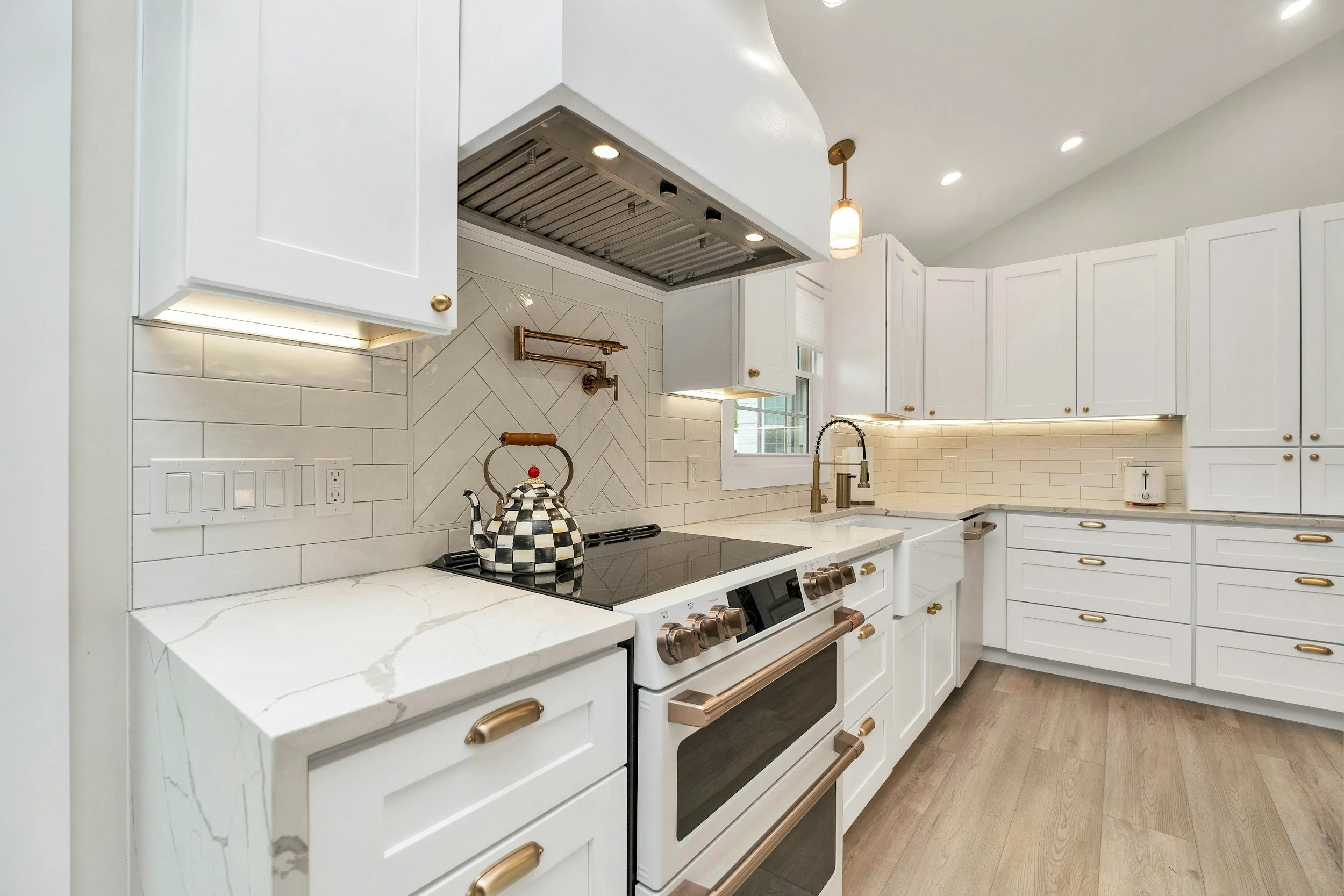
Two range hoods with the same airflow number printed on the box can perform completely differently once they are installed. When researchers at Lawrence Berkeley National Laboratory tested common residential hoods, the share of cooking pollutants each one removed ranged from under 15 percent to over 98 percent. Hood shape, fan setting, and burner position drove most of that gap. Most range hood shopping focuses on CFM, finish, and price. The details that decide whether a hood clears the air are usually missing from the listing entirely, and a few of them cost nothing at all to get right.
Why a Range Hood Matters With Any Stove
Cooking produces air pollution regardless of fuel type. Searing, frying, and roasting release fine particles, grease aerosols, moisture, and volatile organic compounds (VOCs, carbon-based chemicals that evaporate into indoor air) whether the heat comes from gas, electric coils, or induction. Gas burners add their own combustion byproducts on top of that, primarily nitrogen dioxide and carbon monoxide, which is why ventilation carries extra weight in homes that cook with gas. Moisture matters too. Steam that never leaves the kitchen ends up as condensation on windows and cold surfaces, which feeds mold over time.
The most common range hood problem has nothing to do with equipment. In a large survey of Canadian homes summarized by Berkeley Lab researchers, only about 30 percent of households reported regularly using their range hood. A modest hood that runs every time the stove is on will outperform an expensive one that sits off because it is too loud or easy to forget.
Range Hood CFM: What the Number Means and How Much Is Enough
CFM, or cubic feet per minute, measures how much air a hood's fan moves. ASHRAE Standard 62.2, the national benchmark for residential ventilation, sets a minimum of 100 CFM for an intermittently operated kitchen hood. That figure is a floor, not a target. Berkeley Lab's guidance for a standard 30-inch range recommends roughly 100 CFM per foot of cooktop width, or about 250 CFM. In tests of hoods installed in real homes, none reached 75 percent front-burner capture below roughly 200 CFM, though reaching 200 CFM did not guarantee it either. A common industry rule for gas ranges scales airflow to burner output, about 100 CFM for every 10,000 BTU. Island hoods generally need more than wall-mounted ones because cross drafts pull the cooking plume sideways.
The rated number also overstates real-world performance. That same field study found two-thirds of the installed hoods, 10 out of 15, moving no more than 70 percent of the airflow listed in their product literature. Narrow ducts, long runs, sharp bends, and crushed flexible duct all add resistance the fan has to push against. A hood rated at 300 CFM connected to a long, kinked run may deliver far less, which is why duct size and routing deserve as much attention as the fan rating itself.
Capture Efficiency: The Number That Matters More
Capture efficiency is the share of cooking pollutants a hood removes before they mix into the room air. It depends on airflow, but also on geometry and placement, which is where hoods with similar CFM ratings start to diverge.
Burner position has an outsized effect. In Berkeley Lab testing at the highest fan setting, the three hoods studied captured more than 80 percent of back-burner exhaust, and two of them topped 90 percent. Front-burner capture for the same hoods ranged from about 46 to 78 percent. Most hoods only partially cover the front burners, so the rising plume escapes past the front edge. Cooking on the back burners whenever possible is the single cheapest improvement available, and it applies to any hood already installed.
Shape matters as much as power. Open canopy hoods, the kind with a deep, recessed underside that collects rising air before the fan pulls it out, consistently outperformed flat-bottomed designs covered with grease screens. Over-the-range microwave combinations, which also have flat bottoms, captured much less at similar airflow rates in installed testing. A hood should be at least as wide as the cooktop, ideally a few inches wider, and deep enough to extend over the front burners. Mounting height follows the manufacturer's minimum clearance, and lower within that range generally captures more.
An industry test method for capture efficiency now exists, ASTM E3087, and California's building energy code allows hoods to qualify using a capture efficiency rating instead of airflow alone. Rated models are still uncommon, but the metric is worth looking for.
Ducted vs. Recirculating Range Hoods
A ducted hood vents air outside the home. A recirculating hood, also called ductless, pulls air through a grease filter and usually an activated carbon filter, then blows it back into the kitchen. The difference in what each one removes is substantial.
Recirculating filters can catch grease and a meaningful share of particles, and carbon media absorbs some odors and VOCs until it saturates. They do not remove heat or moisture, and they do not reliably remove nitrogen dioxide or carbon monoxide. Gas molecules are far too small for a grease filter to trap, and carbon media holds only a limited amount of gas before it saturates. A 2024 Berkeley Lab study found two filtered recirculating hoods cut particle levels substantially, but the researchers treated them as a partial fix, not a replacement for venting outdoors.
Recirculating hoods still have a place. In a condo, a rental, or a kitchen on an interior wall where ducting is not possible, a recirculating hood is better than nothing. It works best paired with back-burner cooking, an open window, and carbon filters replaced on the manufacturer's schedule. For anyone cooking with gas who can duct to the outside, venting is the upgrade that matters most.
Makeup Air and the 400 CFM Threshold
Every cubic foot of air a range hood exhausts has to be replaced from somewhere. In a leaky older home, that air slips in through gaps. A powerful hood in a tighter home can depressurize the house. That negative pressure can pull exhaust gases backward out of a furnace, water heater, or fireplace that relies on natural draft, a dangerous condition called backdrafting.
The International Residential Code addresses this directly. Since the 2018 edition, a kitchen hood capable of more than 400 CFM requires makeup air when a fuel-burning appliance that is neither direct-vent nor mechanically drafted sits inside the home. Local adoption of code editions varies, so the rule in force depends on the jurisdiction. That air has to arrive at roughly the same rate, through a damper that opens automatically when the hood runs. Many manufacturers now sell hoods rated just under 400 CFM so builders can avoid that requirement. Even in an all-electric home, a high-CFM hood without a planned air supply can underperform simply because the house cannot supply enough replacement air. The larger point is that range hood selection belongs in a whole-house ventilation plan, not as an isolated appliance purchase. A bigger number on the box is not automatically better.
Noise and Whether a Hood Gets Used
Noise is measured in sones, where one sone is roughly the hum of a quiet refrigerator and noise perception roughly doubles as the sone rating doubles. ASHRAE 62.2 calls for kitchen hoods to operate at 3 sones or less at a setting of at least 100 CFM. Since a loud hood is a hood that stays off, the sound rating at the setting actually used for everyday cooking matters more than the maximum airflow. The Home Ventilating Institute (HVI) publishes a directory of certified products with independently verified airflow and sound ratings, which is a more reliable comparison point than manufacturer marketing.
Range Hood Priorities by Budget
No new purchase: Run the existing hood every time the stove is on, on the highest setting tolerable, use the back burners, and let the fan run for 10 to 15 minutes after cooking ends. For a recirculating hood, clean the grease filter and replace the carbon filter on schedule, and crack a window when cooking with gas.
Replacing a hood: Choose a ducted, HVI-certified model with an open canopy at least as wide as the cooktop. Roughly 250 to 400 CFM suits a typical 30-inch range, at 3 sones or less on its everyday setting. Pair it with a smooth, rigid duct of the size the manufacturer specifies and the shortest, straightest route outside.
Full kitchen renovation: Plan the duct route before cabinetry is set, choose a deeper hood that covers the front burners, and look for capture efficiency ratings where available. If the hood will exceed 400 CFM, design makeup air into the project from the start rather than retrofitting it later.
If only one change is possible: Vent the hood outside. Ducting determines whether combustion gases and moisture leave the home at all, and no filter upgrade on a recirculating unit closes that gap.
The Bottom Line
The best range hood for most kitchens is not the most powerful one available. It is a ducted, appropriately sized hood with an open canopy that covers the burners, quiet enough to run every time the stove is on. CFM is a starting point. Capture, ducting, makeup air, and actual daily use determine how much of the cooking plume ends up outside rather than in the lungs of whoever is standing at the stove.
