
Forest Bathing in Winter: Why Cold Weather Nature Time Still Matters
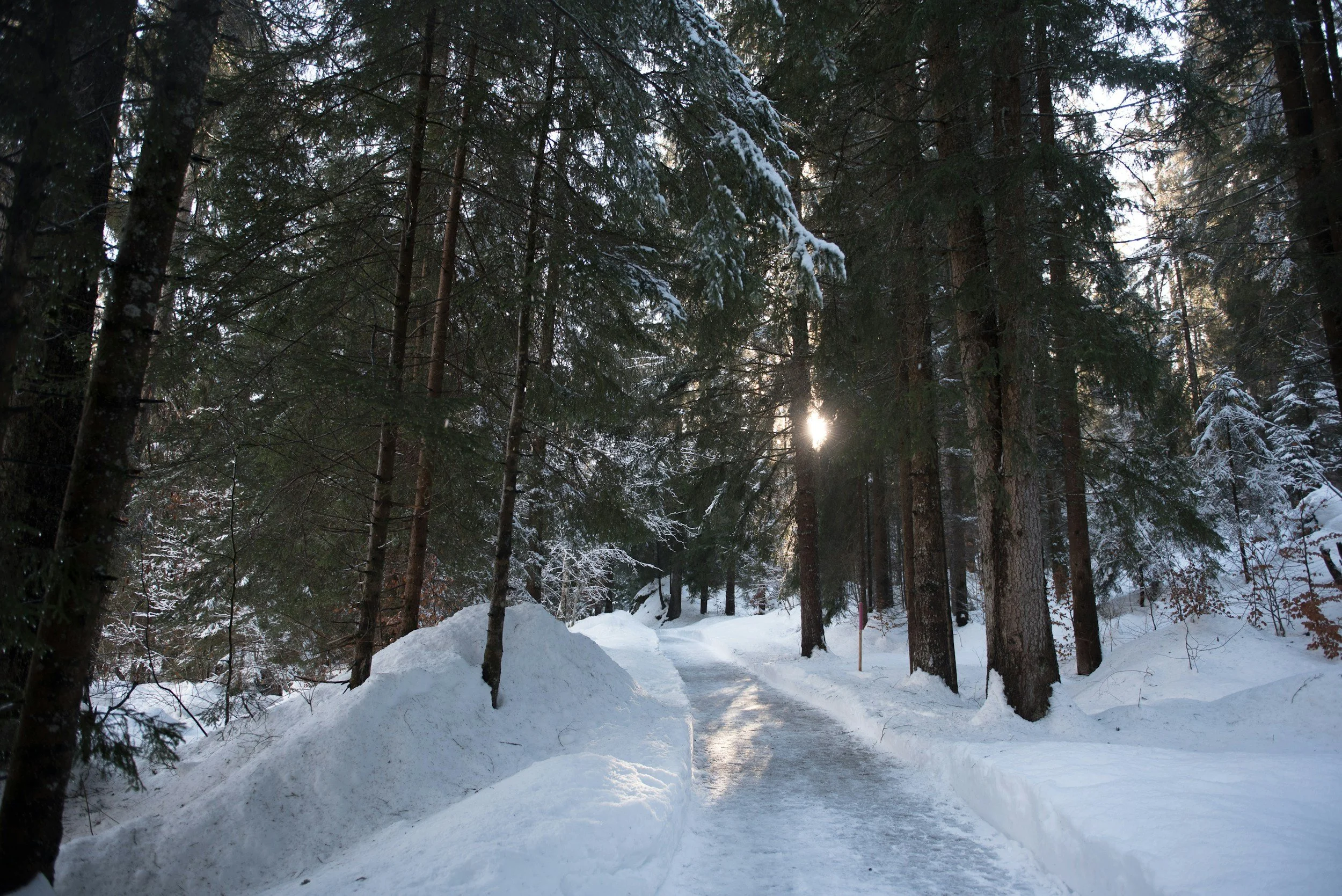
When temperatures drop and daylight shrinks, the instinct is to retreat indoors. But emerging research suggests this is exactly backward: winter may be when time in nature matters most. Forest bathing, the Japanese practice of shinrin-yoku, involves slow, intentional immersion in natural environments. Not hiking for exercise, not nature photography, just deliberate presence among trees with attention turned toward the senses. And while most forest bathing research focuses on warmer months, winter offers distinct conditions for restoration that summer's abundance cannot replicate.
What Forest Bathing Actually Is
Forest bathing is defined more by what you're not doing than by any specific activity. You're not trying to cover distance, achieve fitness goals, or accomplish anything. The practice emerged in Japan in the 1980s as a public health response to stress-related illness, after researchers found that time in forests produced measurable physiological changes: lower cortisol, reduced blood pressure, decreased heart rate, improved immune function, and enhanced mood. Importantly, these aren't placebo effects or vague subjective feelings. They're quantifiable biological responses measured through blood tests, heart rate monitors, and psychological assessments.
The mechanism is intentional slowing. You walk at roughly one mile per hour, or not at all. You pause. You notice the texture of bark, the pattern of bare branches against sky, the sound of wind through trees, the sensation of cold air. The goal is to shift your nervous system from sympathetic mode (the constant low-level alertness of modern life) into parasympathetic mode, the state in which the body actually rests and repairs.
Why Winter Forests Work Differently
Summer forests are rich with sensory input: insects, birdsong, shifting dappled light, the rustle of leaves. For many people this abundance feels restorative. For others, particularly those with sensory sensitivities or already high baseline stress, it can be subtly overwhelming. Winter forests are quieter. Fewer birds, no insects, wind moving through bare branches rather than rustling foliage. The reduced sensory load allows deeper relaxation because your nervous system isn't processing as much information simultaneously. The visual simplicity has its own quality: bare branches create spare, elegant patterns, and snow covers complexity in ways that can feel genuinely meditative.
There's also the matter of phytoncides, the antimicrobial compounds trees emit to protect themselves from pathogens. When you breathe forest air, you inhale these compounds, and research shows they increase natural killer cell activity, the white blood cells that identify and destroy tumors and viruses. A 2010 study published in Environmental Health and Preventive Medicine found that forest air exposure elevated NK cell activity for more than 30 days following a single forest bathing session. A common misconception is that phytoncide emission slows or stops in winter, but evergreen trees (pines, spruces, firs) emit these compounds year-round, and deciduous trees continue producing them in winter at lower but still meaningful levels.
Winter light also has a distinct quality worth understanding. Its lower angle, frequent diffusion through cloud cover, and the way it reflects off snow create different circadian and mood effects than summer's direct brightness. For people experiencing seasonal affective disorder, outdoor time in natural light, even dim winter light, helps regulate circadian rhythms more effectively than indoor lighting. The combination of natural light exposure, physical movement, and the documented stress-reduction effects of forest environments addresses the underlying biology of SAD from multiple directions at once.
Moderate cold exposure adds another layer. When your body is exposed to cold within a manageable range, it increases norepinephrine, a hormone and neurotransmitter associated with improved mood, focus, and reduced inflammation. It also activates brown adipose tissue, the metabolically active fat that generates heat and regulates body temperature. These effects compound with the nervous system benefits of forest immersion in ways that neither provides independently.
How to Practice It in Winter
The most important preparation is dressing for standing still rather than moving. You'll generate far less heat than you would on a normal winter walk, so you need more insulation than the temperature alone suggests. Start with a warm base layer, add an insulating mid-layer, and wear a wind-blocking outer layer. Hat, insulated gloves, warm socks, and waterproof boots are standard. A useful rule of thumb: you should feel slightly too warm when you first step outside. Within ten minutes of standing still, that will shift to comfortable.
For location, the definition of "forest" is flexible. Woodland with evergreen trees is ideal, but mature urban parks, tree-lined trails, or any environment with substantial tree presence and relative quiet all work. Winter has a practical advantage here: popular summer trails are often empty, which contributes to the quiet that makes the practice effective.
Research supports 20 to 30 minutes as a sufficient duration for measurable physiological benefit, and frequency matters more than length. Three 30-minute sessions per week produce more sustained benefit than a single two-hour session, a pattern that winter's shorter days actually support rather than resist.
The practice itself is simply slow attention. Walk at a pace that feels almost uncomfortably slow, or find a spot and stand. Notice branch patterns against the sky, the texture of bark, animal tracks in snow, the way sound travels differently in cold air. Let your attention move where it wants rather than directing it deliberately. The aimlessness is the point.
A few safety considerations matter more in winter than other seasons. Wind chill affects the body significantly more than temperature alone, so check wind chill before going out, not just the thermometer. Below roughly 10°F (-12°C), frostbite risk for exposed skin increases and sessions should be brief or skin fully covered. Ice conditions warrant footwear with real traction. Winter days are short, so starting earlier than feels necessary is wise since being in woods at dusk in cold weather gets uncomfortable quickly. For less-traveled areas, telling someone where you're going and when you expect to return is basic prudence.
What to Expect
Forest bathing isn't uniformly transcendent. Some people feel immediate calm. Many notice the effects more in retrospect: better sleep that night, less irritability the next day, a reduced background hum of anxiety. Benefits accumulate with regular practice rather than arriving fully formed on the first outing.
You might feel cold, or bored, or self-conscious. That's normal and not a sign it's not working. The goal isn't to push through discomfort but to find the level of cold and quiet you can tolerate comfortably enough to stay present for 20 or 30 minutes. If you're uncomfortable, go home and try again another day.
The Wider Point
Modern life involves climate-controlled spaces, artificial light, and near-complete disconnection from seasonal rhythms. We've optimized for comfort in ways that may have costs we don't fully account for. Winter nature time doesn't require rejecting that comfort entirely. It just suggests that a few short sessions per week among trees, properly dressed, sitting somewhere between "outside only when perfect" and "cold-weather camping," might address something real about what stressed nervous systems need. The research supports it. The practice is accessible. Winter is not a reason to wait.
