
Insulation Choices: Why This Permanent Decision Matters More Than You Think
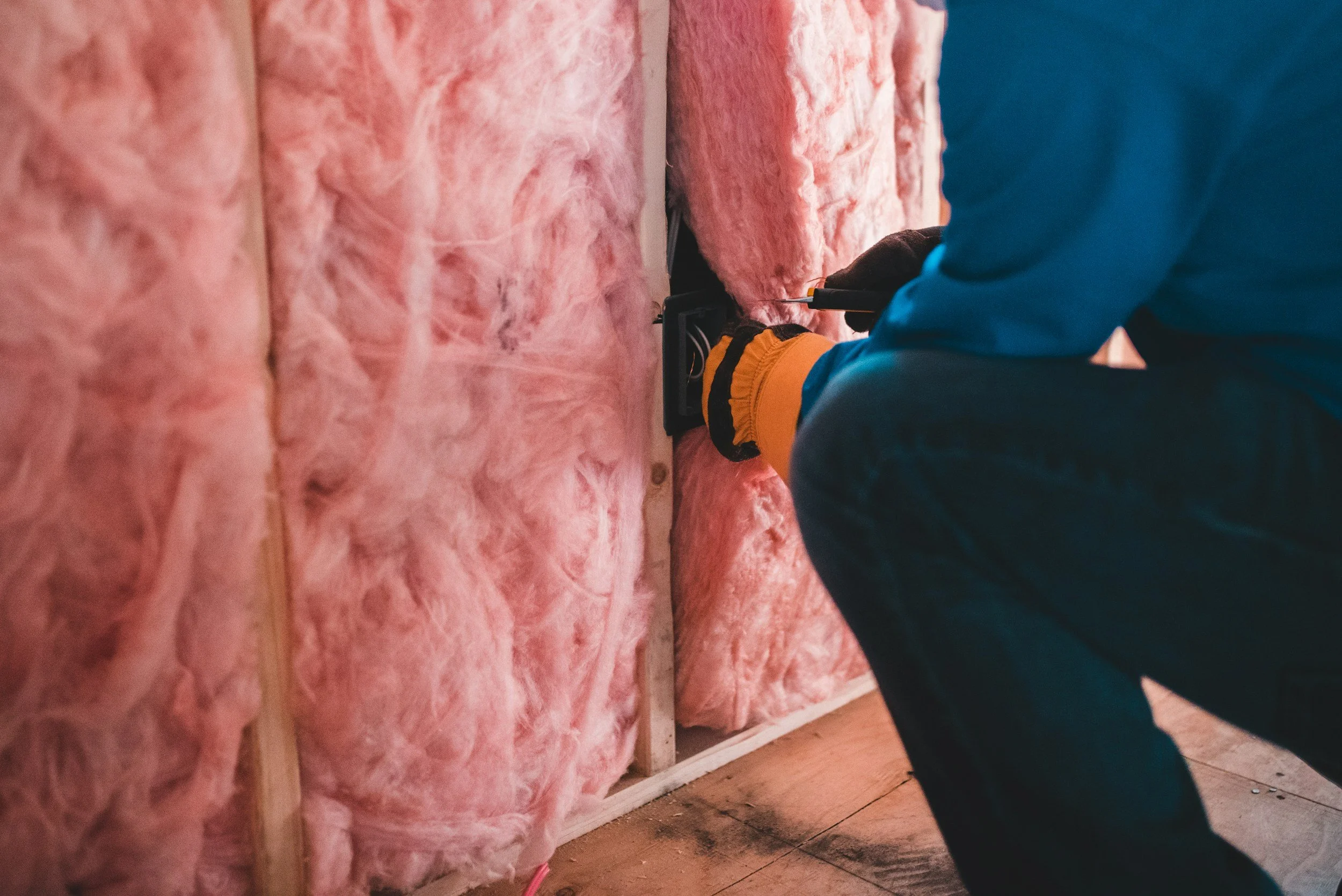
You can repaint walls, replace flooring, or swap light fixtures on a weekend. But insulation? Once it's in your walls, attic, or ceiling cavities, it's staying there for the life of the building. This permanence makes insulation one of the most consequential decisions in construction or renovation.
Your insulation choice affects energy bills for decades, determines comfort in summer and winter, influences indoor air quality, and can create moisture problems that appear years later. You're choosing what your walls will be filled with for the next 30 to 50 years.
What Makes Insulation Permanent
R-value measures how well insulation resists heat flow. The higher the R-value, the better the insulating performance. A material rated R-3.5 per inch means one inch provides R-3.5 of thermal resistance. Most homes need R-13 to R-21 in walls and R-30 to R-60 in attics depending on climate.
Unlike most building materials, insulation isn't designed for removal. Spray foam bonds chemically to framing. Blown-in cellulose settles into every crack. Even batt insulation becomes impractical to extract once drywall is up. Replacement means tearing open walls, a process rarely justified unless you're doing a major renovation anyway.
Insulation also works as part of a system with your air barrier, vapor control, and ventilation. Once installed, that system is set. Poor design can trap moisture, create condensation, or allow air leakage that undermines performance.
Why Spray Foam Dominates Despite the Concerns
Closed-cell spray foam achieves R-6 to R-7 per inch, roughly double fiberglass. It stops air infiltration completely, fills irregular cavities perfectly, and acts as both insulation and air barrier. In tight spaces where you need maximum insulation in minimum depth, spray foam solves problems other materials struggle with.
The health concerns are real. Spray foam uses isocyanates, which are respiratory irritants and potential sensitizers. During installation, these chemicals are extremely hazardous. The foam should cure completely within 24 to 72 hours, but improper mixing, humidity issues, or temperature problems can lead to incomplete curing and persistent off-gassing. When spray foam goes wrong, remediation is brutal and expensive.
The environmental picture is complicated. Spray foam has high embodied carbon from petroleum-based chemistry and energy-intensive manufacturing. Many products use hydrofluorocarbons (HFCs) as blowing agents, which are potent greenhouse gases. Newer formulations use hydrofluoroolefins (HFOs), which break down faster but still carry environmental concerns. The counterargument is that superior insulating performance saves operational energy over decades, offsetting embodied carbon within a few years if the building stays occupied long-term. Spray foam works in all climate zones and is particularly valuable in extreme climates where space constraints limit insulation depth, or in mixed-humidity climates where its combined air and vapor barrier properties simplify moisture management.
The Alternatives: What Else Is Out There
If spray foam makes you nervous or doesn't fit your priorities, you have options. Each comes with its own tradeoffs in the health/performance/cost matrix.
Fiberglass Batts
The most common insulation in North America, fiberglass delivers R-3.2 to R-3.8 per inch. It's affordable, widely available, and straightforward to install. Modern fiberglass no longer contains formaldehyde binders, and the material itself is inert glass fiber, chemically similar to what's used in fiber optic cables. The main health concern is during installation, when airborne fibers can irritate skin, eyes, and lungs. Once contained behind drywall, there's no ongoing exposure.
The performance weakness is air sealing. Fiberglass does nothing to stop air movement, so you need a separate air barrier. Gaps, compression, or settling reduce effectiveness significantly. From an environmental standpoint, manufacturing requires melting sand at high temperatures, though many products incorporate 20 to 60 percent recycled glass. The material doesn't degrade but isn't easily recyclable at end of life. Fiberglass works in all climates when properly installed with adequate vapor control and air sealing strategies.
Cost runs $0.50 to $1.50 per square foot, making it the most budget-friendly option for large areas.
Mineral Wool (Rockwool)
Mineral wool, made from basalt rock or blast furnace slag, offers R-3.0 to R-4.3 per inch. It's inherently fire-resistant (won't burn below 1,800°F), provides excellent sound dampening, and resists moisture better than fiberglass. If batts get wet, the mineral wool itself dries without losing performance, and the inorganic fibers don't support mold growth. However, wet mineral wool that remains in contact with wood framing for extended periods can create conditions for mold growth in the adjacent wood, similar to other wet insulation materials. The advantage is that mineral wool dries faster than cellulose and doesn't compress when wet, but a 24 to 48-hour window applies: materials that stay wet beyond this timeframe are at risk for mold growth on adjacent building materials.
From a health perspective, mineral wool is extremely clean. No formaldehyde, no volatile chemicals, no concerning off-gassing. Once in place, it's completely inert. The sustainability profile is mixed: manufacturing requires melting rock above 2,900°F (high embodied energy), though many products use blast furnace slag, a steel industry byproduct. The material lasts the building's full life without degradation. Mineral wool excels in humid climates and coastal areas where its moisture resistance prevents performance loss, though it works well in all climate zones.
Cost runs $1.50 to $3.00 per square foot, roughly double fiberglass. Like fiberglass, it doesn't provide air sealing. If you're prioritizing health, fire safety, and moisture resilience with the budget to match, mineral wool delivers.
Cellulose
Cellulose is made from recycled paper treated with borate compounds for fire and pest resistance. It's blown into cavities as loose-fill or dense-packed into walls, achieving R-3.6 to R-3.8 per inch.
From an environmental perspective, cellulose has the strongest credentials. It's 75 to 85 percent recycled content (post-consumer paper), requires relatively low manufacturing energy, and has the lowest embodied carbon of common insulation types. At end of life, cellulose is biodegradable.
The health considerations require nuance. Borates (typically boric acid or borax) provide fire and pest resistance, but they're not without concerns. The EPA notes that borate exposure carries reproductive and developmental toxicity risks, particularly for pregnant women. Installation creates dust that can irritate eyes and airways. Once installed and enclosed, exposure is minimal, but renovation or water damage that disturbs the material reintroduces exposure risks.
The critical weakness is moisture vulnerability. If cellulose gets wet, it becomes highly absorbent and acts as a moisture reservoir. Even when the surface feels dry, the bottom layer stays saturated against wood framing, creating conditions for wood rot and mold growth in the structure itself. The borate treatment inhibits mold on the cellulose fibers themselves, but it does not prevent mold growth in the adjacent wood, drywall, or other building materials that remain wet from contact with the saturated cellulose. Given the serious health risks from mold exposure and the environmental impact of mold remediation (which often requires removal of contaminated materials and disposal as special waste), this moisture vulnerability is a significant concern. Wet cellulose compacts permanently, loses 20-40 percent of its R-value, and becomes extremely heavy. Professional consensus is to remove and replace wet cellulose rather than attempt drying. This makes cellulose a poor choice for moisture-prone locations like coastal climates, humid basements, or anywhere roof leaks are likely. Cellulose performs best in dry climates with low humidity and minimal precipitation, where the risk of water intrusion is minimal.
Dense-pack cellulose provides some air sealing benefit in walls. Cost runs $1.00 to $2.00 per square foot installed.
Recycled PET (Polyester) Insulation
A newer category uses recycled plastic bottles (PET) as raw material, converting waste into polyester fiber insulation at R-3.8 to R-4.0 per inch. The fibers are thermally bonded with no chemical binders, creating batts similar to fiberglass but softer and easier to handle.
Health and handling advantages are significant: no skin, eye, or lung irritation during installation, no off-gassing, no formaldehyde. The environmental case is compelling: diverting plastic bottles from landfills gives waste a decades-long second life with lower manufacturing energy than fiberglass or mineral wool. Performance sits middle-of-the-pack, comparable to fiberglass, with no air sealing provided. The material doesn't absorb moisture and resists mold. Recycled PET works in most climates, though like fiberglass it requires careful vapor control in cold climates and adequate ventilation in humid climates.
Cost runs $1.00 to $2.50 per square foot. Availability is growing but still limited compared to mainstream options. Good choice for DIY projects where handling comfort and plastic waste reduction matter.
Insulated Concrete Forms (ICFs)
ICFs are a different approach: stack interlocking foam forms, reinforce with rebar, pour concrete into cavities. The foam stays in place, providing continuous insulation on both sides of the concrete wall. The result delivers R-22 to R-25, exceptional air tightness, thermal mass, and structural resilience. ICFs replace traditional wood framing entirely since the concrete wall itself provides the structural support, eliminating thermal bridging through studs.
ICFs are most common in new construction. Upfront cost is 5 to 10 percent higher than conventional framing, but you gain energy efficiency, noise reduction, and disaster resistance (tornados, hurricanes, fire). Operating cost savings often justify the initial investment over the building's lifetime.
The exceptional air tightness is a feature when paired with proper mechanical ventilation. Modern building science recognizes that controlled ventilation through dedicated systems delivers better indoor air quality than relying on air leaks. ICF homes typically include heat recovery ventilators (HRVs, which recover heat from outgoing air) or energy recovery ventilators (ERVs, which recover both heat and humidity), bringing in fresh air while maintaining energy efficiency. The insulation component is typically expanded polystyrene (EPS) foam, a lightweight rigid foam that is relatively stable with minimal off-gassing concerns. ICFs perform exceptionally well in extreme climates (very cold or very hot) where their high R-value and thermal mass provide maximum energy savings and comfort.
The sustainability picture requires a longer view. Concrete production is carbon-intensive (about 8 percent of global CO2 emissions), and EPS foam is petroleum-based. However, exceptional energy performance (R-22 to R-25 with minimal thermal bridging) means dramatically reduced heating and cooling loads for the building's life. For buildings in service 50 to 100 years, operational carbon savings can justify embodied carbon, though payback is measured in decades. ICFs also offer extreme durability, potentially avoiding the embodied carbon of future rebuilds.
Balancing Health, Performance, Cost, and Environmental Impact
No material excels in all four dimensions. Spray foam delivers maximum performance in minimum thickness, but you accept installation risk, potential off-gassing issues, and high embodied carbon. Mineral wool offers the cleanest health profile with excellent fire resistance at premium cost. Recycled PET provides easiest handling with good environmental credentials, ideal for DIY. Fiberglass works fine on tight budgets with good installation and separate air sealing. Cellulose has the lowest embodied carbon and strongest recycled content credentials, but carries moisture vulnerability and borate exposure concerns during installation.
The operational versus embodied carbon tradeoff deserves attention. Materials with higher embodied carbon (spray foam, ICFs) often deliver better thermal performance, reducing heating and cooling energy over decades. Materials with lower embodied carbon (cellulose, fiberglass) may require more energy if you lack space for adequate thickness. The math depends on your climate, how long the building stays in service, and your energy sources.
Climate and moisture risk matter significantly. In cold climates where vapor control is critical, spray foam's combined insulation and air barrier simplifies wall assemblies. In moderate climates with low moisture risk, fiberglass or cellulose with careful air sealing work well. In hot, humid climates or coastal areas with high moisture exposure, moisture-resistant materials (spray foam, mineral wool) are safer choices than cellulose, which becomes problematic when wet. Consider your local leak risk: if roof or plumbing issues are likely, cellulose's moisture vulnerability becomes a major factor.
How to Approach This Decision
Define your priorities. Health and air quality concerns? Spray foam probably isn't your first choice. Energy efficiency paramount in extreme climate? You need adequate R-values, possibly mineral wool or spray foam in space-constrained areas. Minimizing environmental footprint? Cellulose leads on embodied carbon. Tight budget? Fiberglass works with good installation and separate air sealing.
Get multiple bids, but don't choose on price alone. Installation quality varies enormously. Ask contractors about experience with your chosen material. For spray foam, verify mixing procedures and cure testing. For cellulose, ask about density targets. For batts, confirm air sealing strategy.
Request product specifications and safety data sheets. Understand what's going in your walls. For spray foam, ask about blowing agents and their global warming potential.
Consider phasing if budget is tight. Attic insulation typically delivers biggest energy savings per dollar, followed by walls, then basement. You can prioritize high-impact areas now and upgrade later.
Finally, recognize that perfect insulation installed poorly performs worse than mediocre insulation installed well. Whatever material you choose, execution matters as much as the product.
The Bottom Line
Insulation isn't glamorous. It's hidden behind walls, and once it's in, you never see it again. That invisibility is exactly why the decision deserves serious thought. You're making a choice that affects your home's performance, your family's health, your energy costs, and your environmental footprint for decades.
The good news is that all mainstream options work if installed correctly. The bad news is that installation quality varies widely, and poor execution creates problems that won't surface until months or years later. Take the time to understand what you're choosing and why. Ask questions. Get multiple perspectives. Remember that the cheapest bid or the contractor's default recommendation might not be the right choice for your home.
