
What Regenerative Agriculture Actually Means
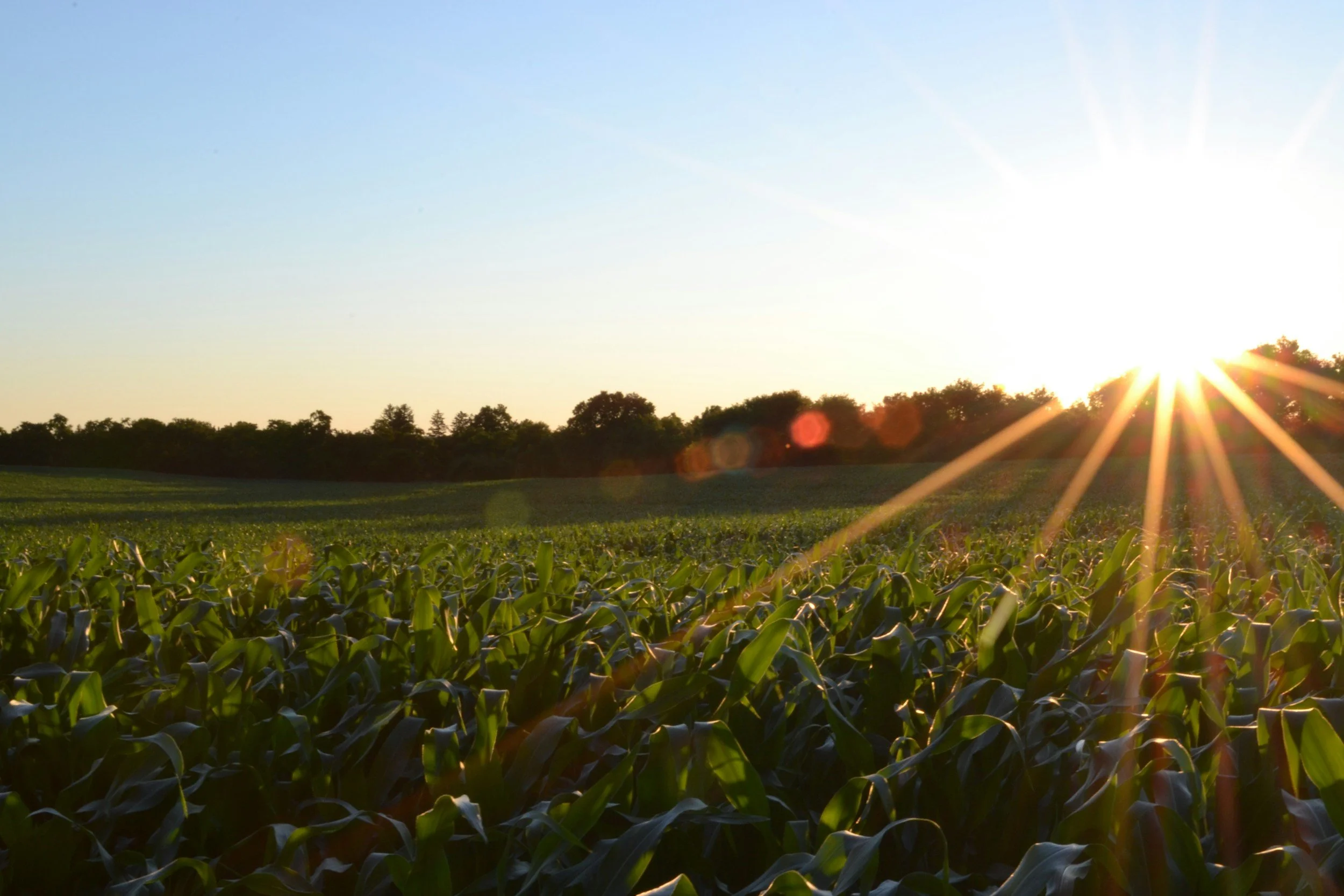
"Regenerative" has become a common word on food labels, brand websites, and climate policy discussions. If you've tried to understand what it actually means at the level of soil biology and farm practice, you've likely found either vague marketing language or dense academic literature. The gap between those two things is worth closing, because the concept has real scientific substance and legitimate caveats that neither a label claim nor a research paper will give you in one place.
What Industrial Farming Has Done to Soil
Healthy soil is not inert dirt. It's a living ecosystem containing bacteria, fungi, protozoa, nematodes, earthworms, and thousands of other organisms interacting in complex ways. These organisms decompose organic matter, cycle nutrients, aerate soil, retain water, and support plant growth. A single teaspoon of healthy soil contains more microorganisms than there are people on Earth.
Industrial agriculture, which relies on synthetic fertilizers, pesticides, herbicides, and repeated tillage (mechanical soil disruption), has significantly degraded this living system. Tillage destroys soil structure and fungal networks. Synthetic nitrogen fertilizer disrupts natural nitrogen cycles and reduces microbial diversity. Monocultures, growing a single crop across large areas year after year, eliminate the plant diversity that supports complex soil ecosystems. The results are measurable: the Food and Agriculture Organization estimates that roughly 33% of the world's soil is moderately to highly degraded. Degraded soil holds less water, requires more inputs to produce crops, releases stored carbon into the atmosphere, and becomes increasingly vulnerable to erosion. Regenerative agriculture is a response to this pattern.
What Regenerative Practices Look Like
Regenerative agriculture is less a single technique and more a framework of interconnected practices that tend to appear together because they reinforce each other.
No-till or reduced tillage leaves soil structure intact. Without mechanical disruption, fungal networks (particularly mycorrhizal fungi, which help plants access water and nutrients in exchange for carbon compounds) can persist and expand. Soil aggregates, the clumps and channels that give healthy soil its texture, stay intact, improving water infiltration and reducing erosion.
Cover cropping means planting crops in the off-season not for harvest but for soil benefit. Cover crops protect bare soil from erosion, add organic matter when terminated, fix nitrogen from the atmosphere if legumes are used, and support soil microbial communities through their root systems. Common cover crops include clover, rye, vetch, and radishes.
Diverse crop rotations cycle different plant species through fields across seasons and years, diversifying root structures, breaking pest and disease cycles, and supporting different microbial communities. Monocultures favor specific organisms; diverse rotations support a broader ecosystem.
Integrating livestock through rotational grazing, where animals are moved frequently rather than allowed to graze a single area continuously, can benefit soil when managed carefully. Grazing stimulates grass growth, animal waste adds organic matter, and hoof activity improves water penetration. Unmanaged continuous grazing causes serious degradation. The management approach is what determines the outcome.
Composting and organic matter additions directly feed soil biology, building the organic matter content that drives healthy soil function.
The Carbon Question
One of the central claims around regenerative agriculture is its potential to sequester carbon, pulling carbon dioxide from the atmosphere and storing it in soil as organic matter. Agriculture accounts for roughly 10 to 12% of global greenhouse gas emissions, and degraded soils have released significant stored carbon over decades of industrial farming.
The supporting science is real but complicated. Healthy soils with high organic matter content store significant carbon, and practices like no-till, cover cropping, and improved rotations have been shown to increase soil organic carbon in controlled studies. A 2020 paper in Scientific Reports estimated that improved soil carbon management could offset between 1.5 and 2.6 gigatons of CO2 per year globally, a meaningful figure in the context of climate mitigation.
The estimates vary widely depending on soil type, climate, management intensity, and measurement methodology. Carbon stored in surface soils can be released again if land use changes or practices revert. Large-scale sequestration requires sustained commitment across millions of acres and verified monitoring systems that don't yet exist at the necessary scale. What's less disputed is that regenerative practices reduce emissions more directly: less synthetic fertilizer means less nitrous oxide (a potent greenhouse gas) released, and less tillage means less mechanical disruption of stored carbon. These benefits hold regardless of how the larger sequestration estimates ultimately resolve.
How Regenerative Compares to Organic
The distinction matters because the two are frequently conflated, and they address different things.
USDA Organic certification primarily defines what's excluded: synthetic pesticides, synthetic fertilizers, GMOs, and antibiotics in livestock. It doesn't require specific practices to improve soil health. A farm can be certified organic while still tilling heavily, planting monocultures, and depleting soil over time, as long as it avoids synthetic inputs. Organic certification is better than conventional in important ways, particularly around pesticide exposure and more natural nutrient cycling, but it doesn't require active soil restoration.
Regenerative agriculture is defined by those soil-building practices. A farm can be regenerative without being certified organic, and certified organic without being regenerative. Some farms are both.
The most rigorous standard combining both is Regenerative Organic Certified (ROC), launched in 2018 by the Regenerative Organic Alliance. ROC requires USDA Organic certification as a baseline, then adds requirements for soil health practices, pasture-based animal welfare, and fair labor conditions. It's relatively new and not yet widely adopted, but it represents the clearest third-party verification of genuine regenerative practice currently available.
The Scalability Problem
Regenerative agriculture faces legitimate questions about scalability that deserve honest acknowledgment. Diverse rotations, cover crops, and livestock integration require more management knowledge and labor than simplified industrial systems. The economic pressures on conventional farmers, including thin margins, commodity price volatility, and debt servicing, make adopting new practices risky and expensive. Some studies have found that transitioning to regenerative practices temporarily reduces yields before soil health improvements kick in, creating real hardship for farms operating without financial safety nets.
The research base, while growing, is also less extensive than the decades of agronomy literature backing conventional systems. Widespread adoption depends on policy support, technical assistance, and economic incentives, not just farmer willingness.
Does Regenerative Agriculture Produce More Nutritious Food?
This is a common claim, and it deserves a careful answer rather than a confident one.
The biological mechanism is plausible. Plants access minerals partly through mycorrhizal fungal networks in the soil, so healthier, more biologically active soil should theoretically improve a plant's access to micronutrients. Some research supports higher mineral density in food grown without synthetic fertilizer shortcuts, and there's evidence that plants forced to source their own nutrients produce higher levels of polyphenols and other secondary metabolites. But most of this research draws from organic agriculture studies rather than regenerative-specific trials, and isolating farming practice as the determining variable is methodologically difficult. Crop variety, climate, soil type, and time between harvest and consumption all affect nutrient content significantly.
The strongest food quality evidence connected specifically to regenerative practice involves animal products. Rotational grazing is a core regenerative technique, and the research on grass-fed beef and pasture-raised eggs showing more favorable omega-3 to omega-6 ratios is reasonably well-established. This is one area where the farming practice and the food quality outcome are more directly linked.
The Bionutrient Food Association is conducting ongoing work to systematically measure nutrient density in regeneratively grown crops, but it's early-stage research. For now, "regeneratively grown food is more nutritious" is better described as a plausible hypothesis with supporting evidence than a proven claim. The soil health and environmental case stands on its own. The food quality benefits may follow, but the research isn't there yet to state it confidently.
Why Soil Health Matters Beyond Crop Yields
Healthy soils filter water, reducing the agricultural runoff that creates hypoxic dead zones in rivers and coastal waters. They support plant diversity, which in turn supports insect populations, birds, and larger animals. They're more resilient to drought and flooding as climate patterns shift.
Soil degradation is a slow-moving problem without the visual drama of a spill or a wildfire, but its long-term consequences for food systems, water quality, and climate are substantial. Understanding what regenerative agriculture actually involves makes it easier to evaluate the claims you'll encounter on product labels and in food system conversations, and to distinguish the farms and brands doing the harder systemic work from those using the language without the substance.
