
Stainless Steel Cookware: The Non-Toxic Classic That Lasts a Lifetime
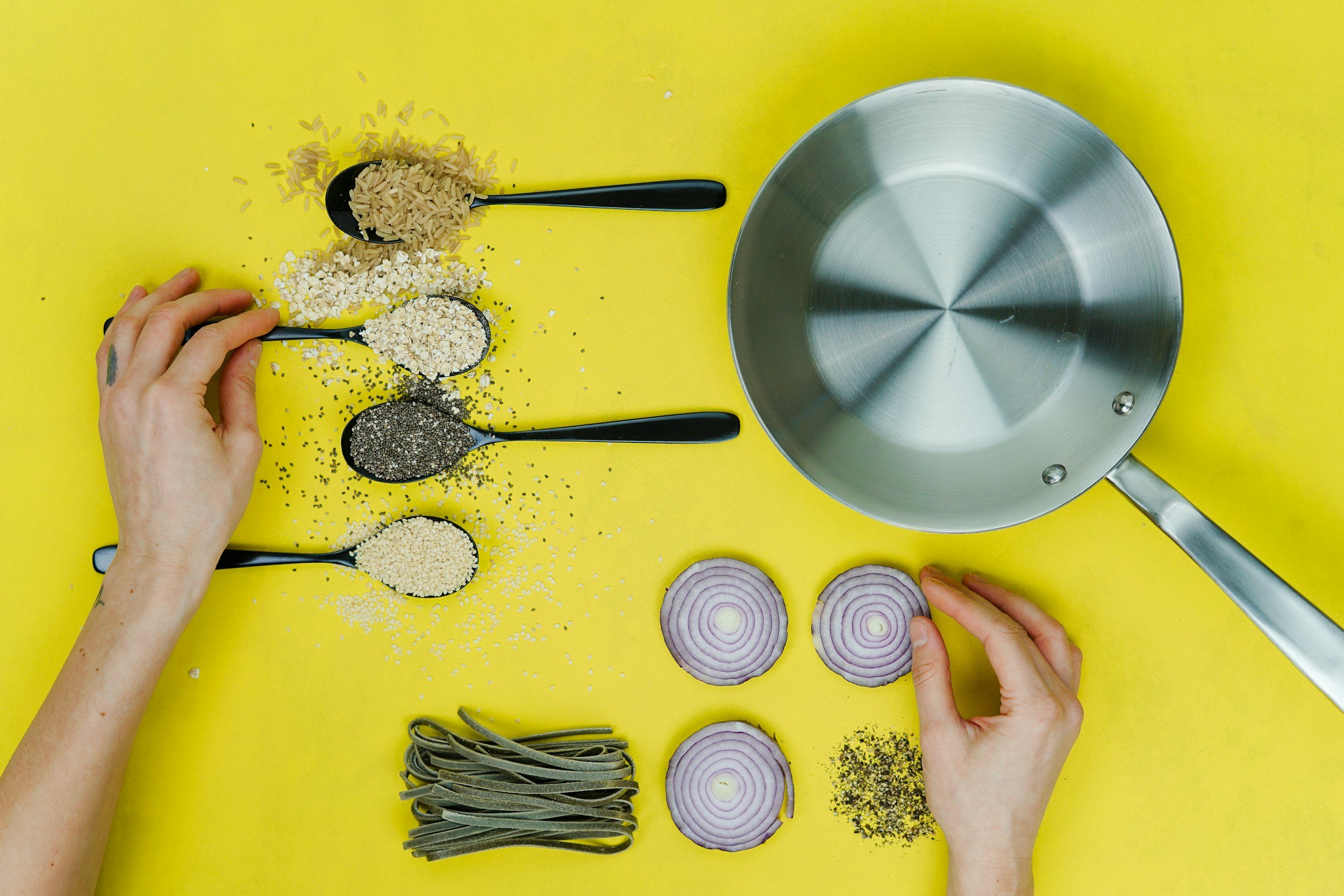
Professional kitchens run on stainless steel, and for good reason: it's durable, completely non-reactive, and once you understand how to use it, it performs beautifully across almost every cooking task. If you've been intimidated by stainless steel because food seems to stick, or you're not sure what the grade numbers mean or why prices vary so dramatically, here's what you actually need to know.
This is part of our cookware safety series. Earlier posts covered PFAS in traditional non-stick and what to look for in ceramic coatings.
What Makes Stainless Steel "Stainless"
Stainless steel is an alloy of iron, chromium, and nickel. The chromium (16 to 18%) is what earns it the name: when exposed to oxygen, chromium forms a thin, invisible oxide layer on the surface that prevents rust, self-repairs when scratched, and keeps the underlying iron from reacting with food or moisture. Nickel adds durability and luster.
You'll see numbers like "18/10" or "18/8" stamped on cookware, indicating the percentage of chromium and nickel. Both grades are excellent for food-contact surfaces and perform nearly identically in practice. A third designation, 18/0, appears on some magnetic exterior layers for induction compatibility, but it's less corrosion-resistant and shouldn't be the surface touching your food. When evaluating cookware, confirm the food-contact surface is 18/10 or 18/8.
Is Stainless Steel Safe?
Yes, with nuance worth understanding. The FDA and European Food Safety Authority both approve stainless steel for food contact without restriction, and its non-reactive surface means it doesn't interact with food the way uncoated aluminum or copper can.
The most common concern is nickel. Research published in Contact Dermatitis found that nickel release from stainless steel cookware during typical cooking is negligible, generally less than 0.1 mg per serving. A cup of black tea delivers 0.5 to 1.5 mg; a cup of beans around 0.3 to 0.6 mg. Even people with documented nickel allergies typically don't react to dietary nickel from cookware, because the amounts are small and ingested nickel doesn't trigger the same response as skin contact. Chromium migration is similarly minimal and occurs in the safe trivalent form (chromium III), not the toxic hexavalent form. The one caveat: simmering highly acidic foods like tomatoes for extended periods in older or damaged pans can increase leaching slightly, though research suggests it remains within safe limits.
Why Food Sticks, and What to Do About It
Sticking isn't a flaw in the material. It's a technique issue, and once you understand the science, it becomes easy to solve. When food proteins contact a metal surface, they form temporary bonds. As those proteins cook and their structure changes through denaturation, the bonds break and the food releases naturally. The problem is moving food before that process is complete.
The fix is preheat and fat. Let the empty pan warm on medium to medium-high heat for two to three minutes. Test it by dropping a small amount of water on the surface: if the droplets ball up and skitter rather than sizzling flat, the pan is ready (this is the Leidenfrost effect, a film of steam forming between the droplet and the hot surface). Add oil or butter, swirl to coat, and let it heat until shimmering. Then add your food, and don't move it. A crust forms over three to five minutes, after which the food releases cleanly on its own. This works for chicken, fish, vegetables, and with practice, even eggs.
Cleaning
For daily use, wash with warm soapy water while the pan is still slightly warm and dry immediately to prevent water spots. When food sticks, the most effective approach is deglazing: with the pan still hot, add a splash of water or wine and scrape with a wooden spoon. The steam loosens residue quickly, and the fond (the browned bits) makes an excellent base for a pan sauce. For stubborn buildup, a baking soda and water paste left for 15 to 30 minutes handles most situations. Oxalic acid-based cleaners work well for mineral deposits. Rainbow discoloration is harmless and wipes off with white vinegar.
What You're Actually Paying For
The core variable is construction. Most quality cookware layers stainless steel on the cooking and exterior surfaces around an aluminum or copper core. Aluminum conducts heat efficiently; stainless steel provides the non-reactive, durable surface. Three-ply construction (stainless, aluminum, stainless) offers solid heat distribution and is sufficient for most home cooks. Five-ply adds more layers for more even heat at high temperatures, though the difference for everyday cooking is modest. Beyond five-ply, performance gains rarely justify the price.
Fully clad cookware (where the layers extend up the sides of the pan) distributes heat more evenly than disc-bottom designs (layers only at the base), which matters for sauces and braising but less so for searing or sautéing. For quality markers: look for the 18/10 or 18/8 stamp, riveted handles rather than welded ones, a flat base that doesn't wobble, and enough weight that the pan feels substantial.
When Stainless Steel Is (and Isn't) the Right Choice
Stainless steel is best for high-heat cooking, sauce development, and acidic dishes. The fond that forms on the surface builds complex flavor that non-stick cookware can't replicate, and it doesn't react with tomatoes, wine, or citrus the way some other materials can. For very high-heat searing where heat retention is the priority, cast iron or carbon steel hold temperature more effectively when cold food hits the surface. For long, low simmering, enameled cast iron's heat retention is an advantage. If you're still building confidence with technique, delicate fish or eggs may be more forgiving in ceramic non-stick in the meantime.
Building Your Collection
Start with a ten-inch skillet, which handles the majority of everyday stovetop cooking. Add a three-quart saucepan with a lid and an eight-quart stockpot and you have a functional set for nearly any situation. Buying individual pieces rather than sets typically offers better value, since sets often include sizes that rarely see use.
The Longer View
Stainless steel doesn't require seasoning, won't degrade or release coatings over time, and moves freely from stovetop to oven to dishwasher. Quality pieces last decades, which changes the economics considerably compared to replacing non-stick pans every few years. The learning curve is real but short. Once proper preheating becomes habit, stainless steel is one of the most reliable, versatile, and genuinely non-toxic options available.
