
All About Mangroves: The Coastal Forests Fighting Climate Change and Protecting Millions
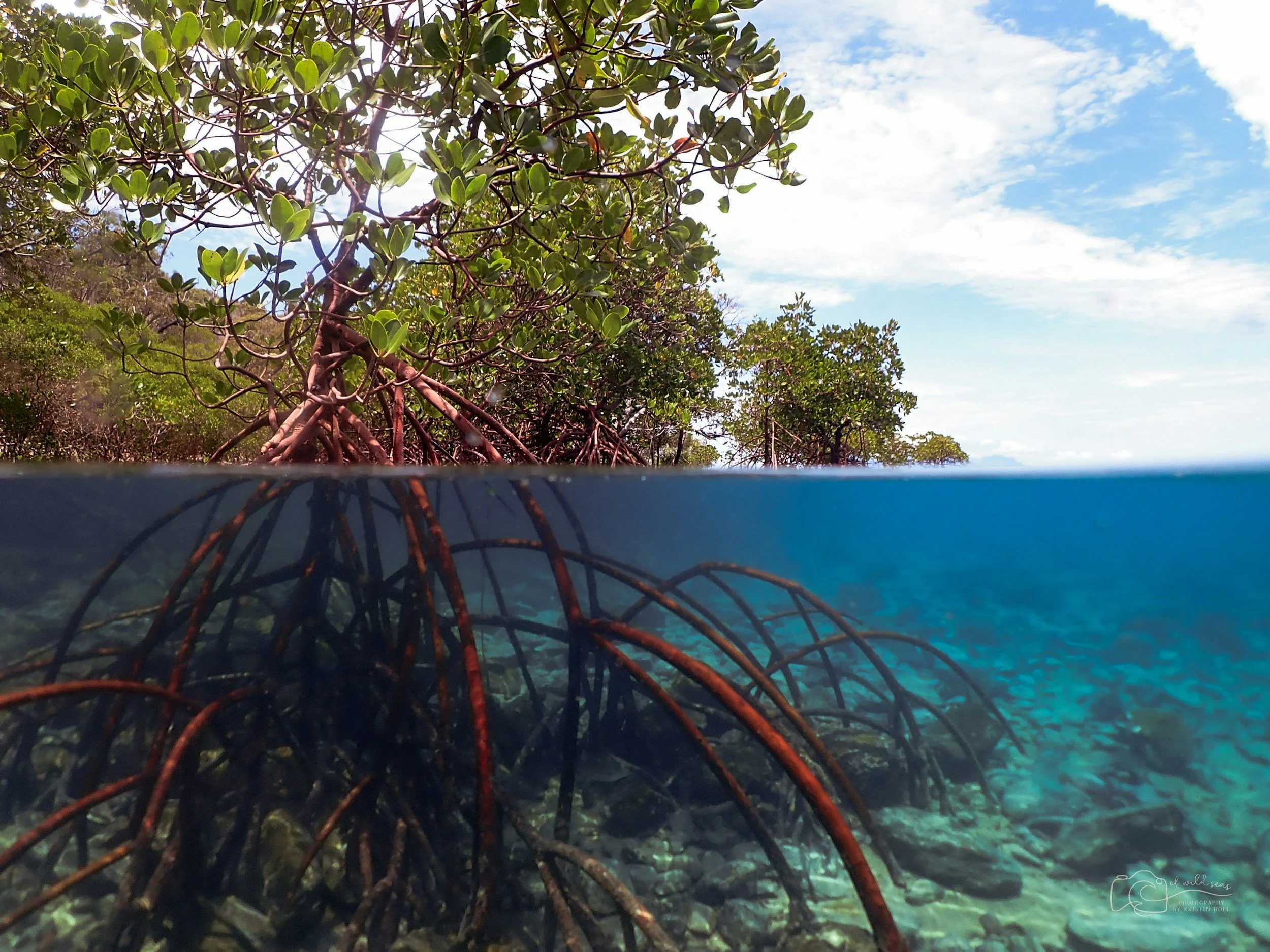
Walk along tropical coastlines and you'll encounter trees growing where no other trees can survive. Their roots arch above the water, branches thick with leaves despite constant salt spray. These are mangroves, and their tangled, swampy appearance understates what they actually do. Mangrove forests protect coastlines from storms, sequester carbon at rates that dwarf terrestrial rainforests, provide nursery habitat for the majority of commercial fish species, and support the livelihoods of millions of people who live along tropical shores. We've lost more than a third of the world's mangroves since 1980, and understanding why that matters requires looking at what these forests actually provide.
What Makes Mangroves Unique
Mangroves thrive in conditions that would kill most plants, and their adaptations explain both their ecological value and their vulnerability.
Most plants die in saltwater because dissolved salt draws moisture out of cells and accumulates to toxic levels. Mangroves have evolved several independent solutions to this problem. Some species filter out up to 90% of salt at the roots through specialized cell membranes. Others absorb salt but excrete it through glands in their leaves, and you can sometimes see the crystals. Still others concentrate salt in older leaves, then drop them. These mechanisms allow mangroves to colonize intertidal zones where freshwater vegetation simply cannot survive.
Oxygen presents a second challenge. Waterlogged coastal sediments contain very little of it. To compensate, mangroves developed specialized root architectures: prop roots that arch from the trunk with pores for gas exchange, pneumatophores that grow upward like snorkels above the waterline, and knee roots that loop above the surface. All of these increase the surface area available for oxygen uptake in anaerobic conditions.
Reproduction in these environments requires another adaptation. Unlike most trees, many mangrove species are viviparous: seeds germinate while still attached to the parent plant, producing a torpedo-shaped seedling called a propagule that can grow six to twelve inches before dropping. Propagules float and remain viable for months, dispersing across ocean currents. When one reaches suitable habitat, it anchors quickly and begins establishing. This strategy bypasses the vulnerable germination phase that ordinary seeds would fail to survive in tidal conditions.
Why Mangroves Matter
Storm Protection
Mangroves act as natural buffers against storm surge and wave energy. Their dense root systems and layered vegetation dissipate wave force and slow water movement across the intertidal zone. Research published in Nature found that mangroves reduce wave heights by an average of 66%. During hurricanes, coastlines with intact mangrove forests experience measurably less flooding and property damage than exposed shorelines.
The 2004 Indian Ocean tsunami offered a large-scale demonstration. Coastal communities with intact mangrove forests suffered less damage and fewer casualties than those where forests had been cleared, even accounting for other variables. Mangroves cannot stop a tsunami, but they reduce its destructive force. The World Bank estimates that mangroves prevent over $65 billion in property damage annually worldwide, a figure that will grow as climate change intensifies tropical storms and raises sea levels.
Carbon Storage
Mangroves store three to five times more carbon per acre than terrestrial forests, despite covering far less total area. Globally, they hold roughly 10% of all tropical forest carbon while occupying less than 1% of tropical forest area. Two factors drive this outsized capacity. Mangroves grow rapidly in nutrient-rich coastal waters, fixing large amounts of atmospheric carbon through photosynthesis. More importantly, the waterlogged, oxygen-poor sediments beneath them prevent organic matter from decomposing, locking carbon into deep soils for millennia rather than returning it to the atmosphere.
This carbon stored in coastal ecosystems is called blue carbon. When mangroves are destroyed, that sequestered carbon is released. Protecting existing mangrove forests and restoring degraded areas represents one of the higher-value climate mitigation opportunities available, and carbon finance programs are increasingly treating mangrove conservation as a legitimate climate action.
Fisheries and Food Security
Approximately 75% of commercial fish species depend on mangroves at some point in their life cycle. The complex root systems provide shelter, predator protection, and abundant food for juvenile fish and invertebrates. Snappers, groupers, tarpon, and shrimp are among the species that use mangroves as nurseries before moving to coral reefs or open ocean as adults. Studies show that losing mangrove habitat can reduce fish catches by up to 80% in adjacent areas, while restoration improves fishery productivity within five to ten years.
More than 100 million people live within mangrove zones, many relying on mangrove-supported fisheries for both protein and income. The connection between mangrove health and food security in coastal communities is direct and well-documented.
Biodiversity
Beyond commercial fisheries, mangroves support over 1,500 plant and animal species. Birds nest in the canopy and feed in the mudflats. Proboscis monkeys and mangrove crabs live in these forests almost exclusively. Estuarine crocodiles, manatees, and in the Sundarbans of India and Bangladesh, Bengal tigers all depend on mangrove habitat. This biodiversity has practical value beyond its intrinsic worth: more diverse ecosystems recover faster from disturbances and maintain function across a wider range of conditions.
Where Mangroves Grow
Mangroves occupy tropical and subtropical coastlines between roughly 30°N and 30°S latitude, limited by temperature since prolonged freezing kills them. Indonesia holds the largest share, roughly 23% of global mangroves. Brazil, Australia, Nigeria, Mexico, Bangladesh, India, and Malaysia all have substantial forests. In the United States, mangroves grow in Florida, Louisiana, Texas, Hawaii, and territories including Puerto Rico, with the most extensive coverage in the Everglades.
One relatively recent development worth tracking: mangroves are expanding poleward as climate change warms coastlines that were historically too cold. This creates complex ecological transitions as mangroves replace salt marshes in zones that previously marked their northern and southern limits.
The Threats They Face
Coastal development has been the primary driver of mangrove loss. Cities, ports, resorts, and industrial facilities consume mangrove habitat directly, and development also alters the hydrology that mangroves require, preventing the tidal inundation cycles that sustain them. Aquaculture, particularly shrimp farming, has destroyed enormous areas in Southeast Asia and Latin America. These operations typically run five to ten years before soil degradation forces abandonment, and the resulting ponds rarely recover naturally. Agricultural conversion for rice paddies and oil palm plantations accounts for further losses, while unsustainable logging for charcoal and timber degrades forests faster than they can regenerate.
Climate change compounds all of these pressures. Rising sea levels threaten mangroves caught between advancing water and inland human development, leaving no room to migrate. More intense storms damage established forests, and changes in rainfall patterns alter the salinity and hydrology that different mangrove species are adapted to.
Restoration and What Works
Mangroves can recover when conditions allow, and restoration science has improved considerably. Early restoration efforts often failed because they focused on planting seedlings without addressing why the forest was gone in the first place. Where hydrology has been altered by roads, fill, or drainage channels, those problems need to be corrected before planting will succeed. Florida's restoration work has focused heavily on hydrological restoration, removing infrastructure that blocked tidal flow and allowing natural recovery across thousands of acres.
Where suitable conditions and nearby seed sources exist, protecting degraded areas and allowing natural regeneration often outperforms active planting in survival rate and species composition. Community-based restoration has shown strong results in the Philippines and Indonesia, partly because fishing communities have direct economic incentives to see restored forests succeed. Successful restoration typically achieves canopy cover comparable to natural forests within ten to fifteen years and sustains itself without ongoing intervention after establishment.
The Economic Case
The value gap between intact mangroves and mangroves converted to other uses is substantial. Research published in PLOS ONE estimates mangroves generate around $37,500 per hectare annually in fishery support value alone. Storm protection adds $3,000 to over $57,000 per hectare per year depending on location and storm exposure. Carbon sequestration at current market prices contributes $1,000 to $3,000 per hectare annually. Ecotourism adds further value without depleting the resource. Combined, these services typically total $40,000 to $60,000 per hectare annually. Shrimp farming on converted mangrove land generates roughly $1,200 to $3,000 per hectare per year before degradation forces abandonment.
The core problem isn't economic ignorance. It's that the people who capture the profit from destroying mangroves are not the same as the people who bear the costs. Aligning those incentives requires payment for ecosystem services programs, enforceable coastal protection policies, and recognition that the economic case for mangrove conservation is not idealistic but straightforwardly numerical.
What You Can Do
Seafood choices are among the most direct levers available to individual consumers. Shrimp farming has destroyed more mangrove area than any other single industry; choosing wild-caught or sustainably certified shrimp, or looking for Aquaculture Stewardship Council or Marine Stewardship Council certification, reduces demand for mangrove-destructive production. If you purchase carbon offsets, prioritizing projects protecting or restoring mangrove forests directs funding to high-value climate action. Conservation organizations including Mangrove Action Project, Wetlands International, and The Nature Conservancy run verified mangrove programs. If you travel to mangrove regions, choosing tour operators with genuine conservation commitments and spending money in ways that benefit communities with an economic stake in intact forests both matter at the local level. At the policy level, supporting coastal zone management regulations, environmental impact requirements for coastal development, and restoration funding all address the systemic drivers of mangrove loss.
The Path Forward
Mangrove science is settled. The ecological services are documented, the economics favor conservation, and restoration techniques work when properly applied. The gap is between what we know and what policy and markets incentivize. As sea levels rise and tropical storms intensify, the communities that depend on these forests for storm protection and food security will feel that gap more acutely. Protecting what remains and restoring what's been lost is practical investment in coastal resilience, not environmental sentimentality, and the case for it has never been more clearly supported by evidence.
