
Enameled Cast Iron Cookware: What It Is and When It's Worth It
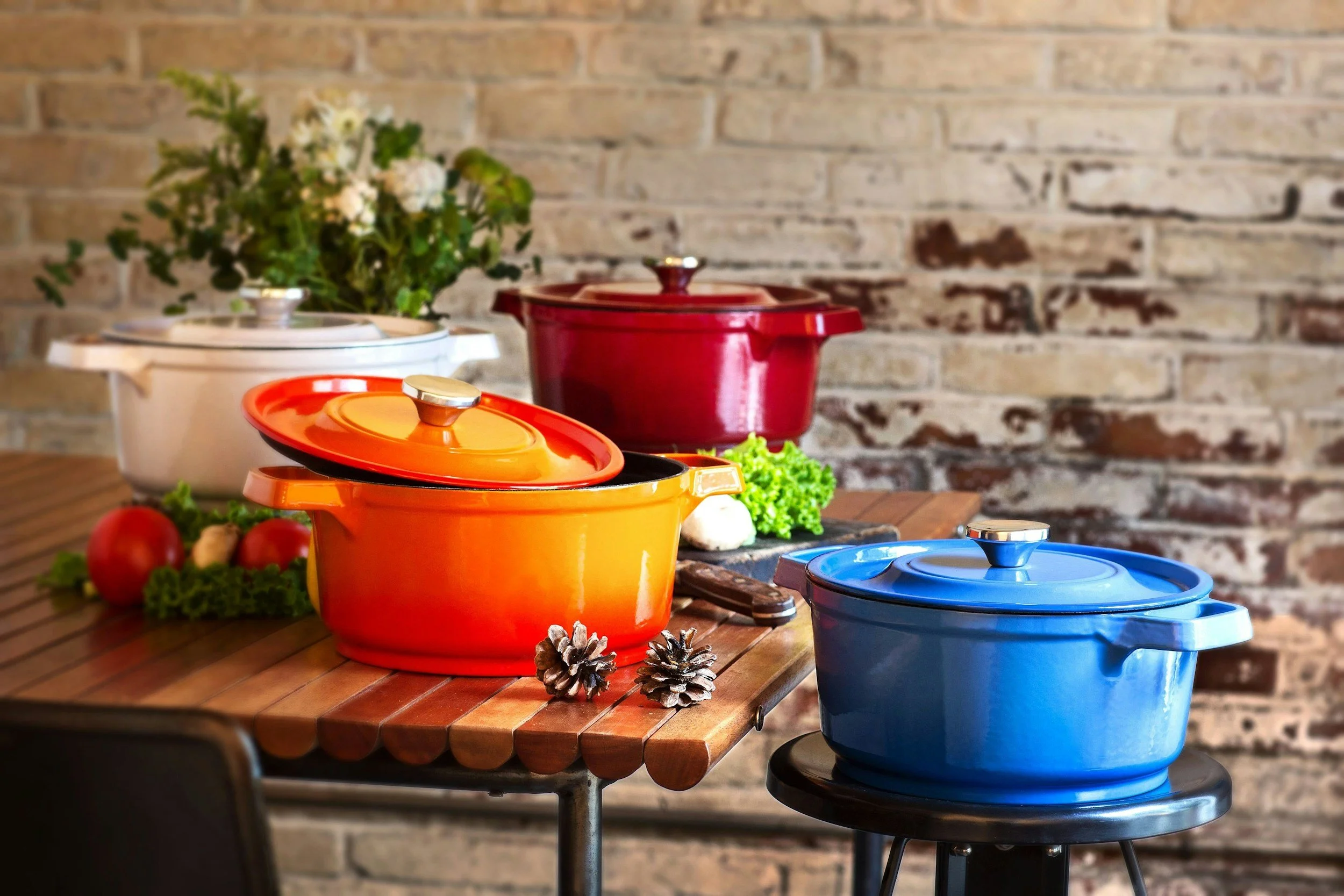
Enameled cast iron sits in an interesting position in the cookware landscape. It shares the heat retention and durability of bare cast iron but eliminates the seasoning requirement that some people find prohibitive. It handles acidic foods without hesitation, comes in colors that make it presentable at the table, and requires no particular technique to maintain. It's also expensive, heavier than most alternatives, and less suited to high-heat cooking than its uncoated counterpart. Whether it belongs in your kitchen depends on what you actually cook and what trade-offs you're willing to make.
The next post in this series will cover bare cast iron in detail, including seasoning, care, and how it compares to other non-toxic cookware options.
What Enameled Cast Iron Actually Is
The base material is the same as bare cast iron: molten iron poured into a mold and allowed to harden, with carbon content of roughly 2 to 4% that gives it its characteristic density and heat properties. The distinction is the enamel layer, a form of porcelain glass fused to the iron surface at very high temperatures during manufacturing. This creates a smooth, non-porous cooking surface that doesn't require seasoning and doesn't react with food.
The enamel is typically applied in two layers: a ground coat that bonds directly to the iron and provides adhesion, and a finishing coat that creates the cooking surface and exterior color. Quality manufacturers control this process carefully because enamel that's applied unevenly or fired incorrectly can chip or crack prematurely. The difference between a $60 enameled Dutch oven and a $350 one often comes down to the consistency and durability of this process, not to any difference in the iron itself.
What Enamel Actually Does
The enamel layer solves two specific problems that bare cast iron presents.
First, it eliminates reactivity with acidic ingredients. Bare cast iron reacts with acids in tomatoes, wine, vinegar, and citrus over extended cooking times, which can strip seasoning, leach iron into food at elevated levels, and impart a metallic flavor to dishes. Enameled cast iron doesn't have this problem. You can braise short ribs in red wine for three hours, simmer a tomato-based chili all afternoon, or make a French onion soup with a splash of cognac without any concern about the cookware. This makes enameled cast iron the right tool for a specific category of cooking that bare cast iron handles less well.
Second, it eliminates the need for seasoning maintenance. Bare cast iron requires building and maintaining a polymerized oil layer to prevent rust and provide non-stick properties. Enameled cast iron arrives ready to use and stays that way without any special treatment between uses. For people who find the seasoning process confusing or who cook infrequently enough that their bare cast iron keeps losing its seasoning between uses, this is a meaningful advantage.
What enamel doesn't do is make the pan non-stick in the way a coated surface is. Enameled cast iron has a smooth surface that releases food more readily than raw iron, but it's not comparable to ceramic non-stick or PTFE. Eggs will stick. Delicate fish will stick unless you use adequate fat and manage heat carefully. Understanding enameled cast iron as a braising and slow-cooking vessel rather than a non-stick pan sets the right expectations.
Safety
Both the enamel and the underlying iron are non-toxic and approved for food contact. Modern enameled cast iron from established manufacturers is lead-free and cadmium-free: these heavy metals were historically used in ceramic glazes as colorants and stabilizers, but reputable manufacturers have moved away from them under regulatory pressure. The safety caveat is about sourcing. Inexpensive enameled cast iron from manufacturers with less transparent supply chains carries more uncertainty, particularly pieces from unfamiliar brands through marketplace sellers. If you're buying enameled cast iron primarily for health reasons, a manufacturer with documented third-party testing and a known track record is worth the premium.
Interior chipping warrants specific attention. A chip on the exterior or rim is cosmetic. Chipping on the cooking surface exposes raw iron, which can react with acidic foods and create rough texture that increases sticking. Replace or retire a piece when interior chipping becomes substantial.
Performance
Enameled cast iron excels at low-and-slow cooking where its heat retention properties shine. A Dutch oven holding steady temperature through two hours of braising produces results that thinner cookware can't match. The heavy lid seals tightly and returns condensation to the food, and the mass of the vessel smooths out temperature variation from the oven's heating element. For braises, stews, soups, and bread baking, this is exactly the right tool.
Where enameled cast iron is less suited is high-heat cooking. Enamel can crack under thermal shock (moving directly from a cold refrigerator to a hot oven, or from a very hot burner to a cold counter), and most manufacturers recommend against preheating empty on the stovetop, which limits high-heat searing. Bare cast iron and carbon steel handle those applications better. Enameled cast iron is also not dishwasher-safe in practice, despite some manufacturers claiming it is: repeated dishwasher cycles accelerate enamel dulling and can degrade the cooking surface over time.
Price and What It Reflects
Quality enameled cast iron is expensive. A 5 to 7-quart Dutch oven from a premium brand runs $300 to $400; budget lines offer comparable performance at roughly $60 to $80 for the same size. The difference is real but narrower than the price gap suggests. Premium brands offer tighter quality control, more consistent enamel application, lifetime warranties, and lids that fit more precisely. If you're buying one piece to use for 20 years and pass along afterward, the case for spending more is legitimate. Budget options perform well for most home cooking applications and are a reasonable starting point if you want to test whether you'll actually reach for enameled cast iron before committing to a larger investment. Brands positioned in between vary more widely in quality and are harder to evaluate without hands-on testing over time.
Practical Considerations
Weight is not a minor issue. A 7-quart Dutch oven from a premium brand weighs about 13 pounds empty, and full of beef stew you're moving 20-plus pounds from stovetop to oven. For anyone with wrist, shoulder, or grip limitations, this is worth thinking through before purchasing.
Cleaning is straightforward: warm soapy water and a soft sponge handle everyday use, and stubborn residue responds to soaking for 20 to 30 minutes before a gentle scrub. Avoid steel wool and harsh abrasives. For discoloration on lighter-colored interiors, a baking soda and water paste left briefly on the surface handles most staining. For deeper staining, fill the pot with water, add two tablespoons of hydrogen peroxide, bring to a brief simmer, let it cool, then wash normally. This works well on the brown residue that accumulates after repeated tomato cooking.
Who It's For
Enameled cast iron makes most sense for cooks who regularly make braises, stews, or slow-cooked acidic dishes, want to go stovetop to oven without thinking about it, and prefer cookware with no maintenance requirements. It's also the right choice if bare cast iron's seasoning requirement has been a barrier, or if you've had trouble keeping a bare pan properly seasoned with your cooking frequency.
It makes less sense if your kitchen already has quality stainless steel, which handles acidic cooking without reactivity at lower cost and weight. It's also not a substitute for bare cast iron if high-heat searing performance is the priority. Enameled cast iron doesn't improve with age the way bare cast iron does, which is an advantage in some respects and a limitation in others.
Many experienced home cooks end up with both: a bare cast iron skillet for searing and everyday cooking, and an enameled Dutch oven for braises and acidic dishes. The two cover each other's limitations neatly, and the next post in this series covers what bare cast iron brings to that combination.
For the right cooking style and budget, enameled cast iron is excellent and genuinely long-lasting. Buying the best piece you can afford from a manufacturer with transparent quality standards and using it for the tasks it does well is the straightforward path to getting value from it.
