
How to Create a Non-Toxic Nursery on a Budget
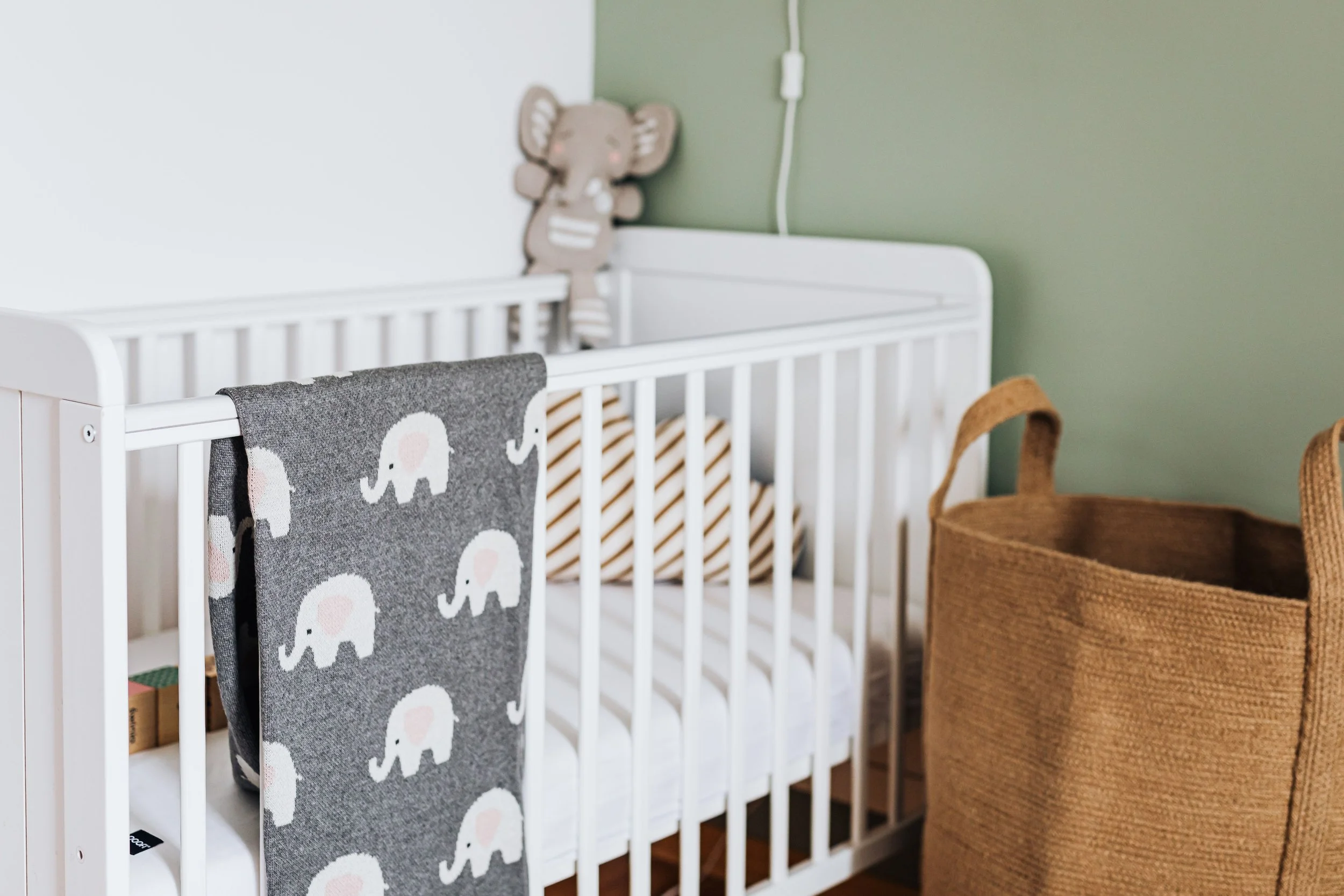
A nursery gets built from scratch more than almost any other room in a home: new mattress, new paint, often new furniture, all within a compressed window before a due date. That compression is exactly why priority order matters here more than in most rooms. An infant spends far more hours in direct contact with a crib mattress than an adult spends in contact with any single surface in a home. Infants also breathe faster relative to body size and are more likely to mouth nearby surfaces. Chemical exposure that barely registers for an adult carries more weight for a newborn. A genuinely non-toxic nursery starts from that reality, with a specific hierarchy rather than a shopping list treated as equally urgent across the board.
Start With the Nursery's Crib Mattress, Not the Paint
The crib mattress is the highest-priority item in the room, and safety comes before toxin avoidance here, not after it. Every crib mattress sold in the United States has to pass a federal firmness standard, 16 CFR Part 1241. The Consumer Product Safety Commission (CPSC) set that standard because a mattress that is too soft raises the risk of Sudden Infant Death Syndrome by letting an infant's face sink into the surface. Two simple checks work at home: press down on the mattress and confirm it springs back without leaving an indentation. Then confirm no more than two fingers fit between the mattress edge and the crib frame. Firmness is non-negotiable regardless of budget. A softer "premium" mattress is a safety downgrade, not an upgrade.
Once firmness is confirmed, material choice is where budget and toxin avoidance actually intersect. Conventional crib mattress foam and waterproof covers can contain polyurethane foam with associated VOC off-gassing and, in some covers, phthalates used to keep vinyl flexible. Mattresses certified GREENGUARD Gold have been independently tested for chemical emissions. Natural fiber covers or foam alternatives sidestep the phthalate question in the cover material specifically. This is the one nursery item worth stretching budget for, since it also involves the most sustained, direct physical contact of anything in the room.
Furniture: The Flame Retardant Question
Why do so many older couches and nursery gliders contain flame retardant chemicals in the first place? Furniture flame retardants have an unusually clear regulatory backstory. A 1975 California rule, Technical Bulletin 117, required foam furniture to resist a small open flame for 12 seconds. Because California is such a large market, manufacturers nationwide met the standard the same way, treating foam with flame retardant chemicals rather than building separate California and non-California product lines. Research over the following decades linked several of those chemicals, including PBDEs, to lowered IQ in children, hormone disruption, and cancer. More than 200 scientists signed a 2010 consensus statement documenting the harm, organized in part by the Green Science Policy Institute. California revised the standard in 2013, replacing the open-flame test with a smolder-resistance test that furniture can pass through fabric and barrier design instead of chemically treated foam. The revised standard became mandatory in 2015.
Furniture manufactured after 2015 is considerably less likely to contain added flame retardants. The revised standard does not explicitly prohibit them, though, so a label stating "contains no added flame retardant chemicals" is a more reliable signal than manufacture date alone. Solid wood furniture without integrated foam cushioning sidesteps the question for the piece itself, though any cushions or padding added separately still warrant the same label check.
Paint, Flooring, and Timing
Paint and flooring off-gas on their own timelines: generally weeks for paint, considerably longer for composite wood furniture or cabinetry bound with formaldehyde-based resin. The practical fix costs nothing extra. Paint the room and install any new flooring several weeks before the due date rather than the week before, so the steepest part of the emission curve passes before the room is occupied overnight. Zero-VOC and low-VOC paints are now priced close to standard lines at most retailers, making this one of the cheapest upgrades in the entire room.
Nursery Air Quality Basics
Ventilating the room during and after painting or installing new furniture matters more than any air purifier bought afterward. A purifier can reduce particulate matter in the air. It does not stop a material from off-gassing at the source, and treating one as a substitute for ventilation or lower-emission material choices misunderstands what it actually does. Opening windows and running the home's ventilation system for the first few weeks after setup, and periodically afterward, does more for indoor air quality than any single product purchase.
Secondhand Strategies That Actually Work
Some nursery items are strong secondhand candidates. Solid wood dressers, changing tables, and bookshelves hold up well once inspected for structural stability. Repainting an older piece with low-VOC paint addresses both cosmetic wear and any lead paint concern if the piece predates 1978. Natural fiber textiles, blankets, and clothing wash easily and carry minimal ongoing off-gassing risk secondhand.
Two categories are worth buying new regardless of budget. Is a hand-me-down crib actually safe? Only if it was manufactured after June 2011, when a federal standard followed years of drop-side crib recalls linked to infant deaths. Even then, the exact model should be checked against the CPSC's recall database before use, since a recall is not something that shows up on visual inspection. Crib mattresses are the other exception. Some safe-sleep researchers have found an association between reused mattresses and elevated SIDS risk, though the precise mechanism is still debated. A new mattress also guarantees the firmness has not degraded from years of use in a way that would not necessarily be obvious.
Where the Nursery Budget Actually Goes
If the full list is not affordable at once, here is the order that reflects genuine risk rather than marketing pressure. A correctly firm, new crib mattress comes first. A crib that meets current federal safety standards is second. Low-VOC paint is third, since it costs nothing extra over standard paint. Flame-retardant-free or solid wood furniture is fourth, as budget allows. Decorative items, wall art, and nursery-specific gadgets sit last. None of them carry the same exposure or safety weight as what a newborn spends eight or more hours a night in direct contact with.
