
Oil and Gas 101: Coal, Oil, and Natural Gas Explained
"Energy dominance," LNG exports, drilling permits, the war on coal versus the revival of coal: fossil fuels have been in the news constantly over the past year, but the terms tend to get used interchangeably even though the three fuels behind them are genuinely different substances with different origins, different extraction methods, and different climate footprints. Understanding what coal, oil, and natural gas are makes every headline about energy policy easier to evaluate on its own terms.
How These Fuels Form Underground
Coal and the two fuels grouped together as "oil and gas" come from entirely different starting material. Coal forms from plant matter that accumulated in ancient swamps, got buried under sediment, and was slowly compressed and heated over millions of years in a process called coalification. The longer and deeper that process runs, the higher the coal's rank: lignite is the youngest and least energy dense, while anthracite has been transformed the longest and packs the most energy per pound.
Oil and natural gas come from an entirely different source than coal does, which is part of why they're so often found together. Both come from marine organisms, mostly plankton and algae, that settled into ocean and lake sediment and were buried under enough rock to heat them gradually over geologic time. At moderate temperatures, that organic material converts into crude oil, the raw petroleum that comes out of the ground before any refining. Push the temperature higher, and the same source material breaks down further into natural gas instead. Geologists call this temperature range the oil window, and it's the reason a single rock formation can produce oil in one layer and gas in another.
The three fuels also differ meaningfully in how much energy they pack per pound. Crude oil holds roughly 42 to 45 megajoules per kilogram, natural gas comes in around 35 to 40, and coal trails at about 24, though that number climbs for higher-rank coal like anthracite. Oil and gas being more energy dense than coal is part of why the global economy shifted so heavily toward them over the twentieth century.
How Coal, Oil, and Gas Are Extracted
Getting these fuels out of the ground looks different depending on where they are and how they're trapped, and the method matters for both cost and environmental impact.
Conventional drilling: A vertical well taps into oil or gas that has already migrated through porous rock and pooled under a layer of impermeable cap rock. This is the oldest and generally least disruptive method, since the fuel flows or gets pumped out without needing to break up the surrounding rock.
Hydraulic fracturing (fracking): Combined with horizontal drilling, this method injects high-pressure water, sand, and chemicals into shale rock to crack it open and release oil or gas trapped directly inside the rock rather than pooled somewhere else. Fracking is what turned the US into the world's largest natural gas producer over the past two decades, unlocking reserves in shale formations like the Permian Basin and Haynesville that conventional wells couldn't reach. It also carries the most significant environmental concerns of any extraction method in wide use: methane leaks at the wellhead are a primary driver of the leakage problem discussed in the emissions section, fracking fluid injection has been linked to increased seismic activity near injection sites, and the risk of groundwater contamination from well casing failures, while not universal, is documented and ongoing.
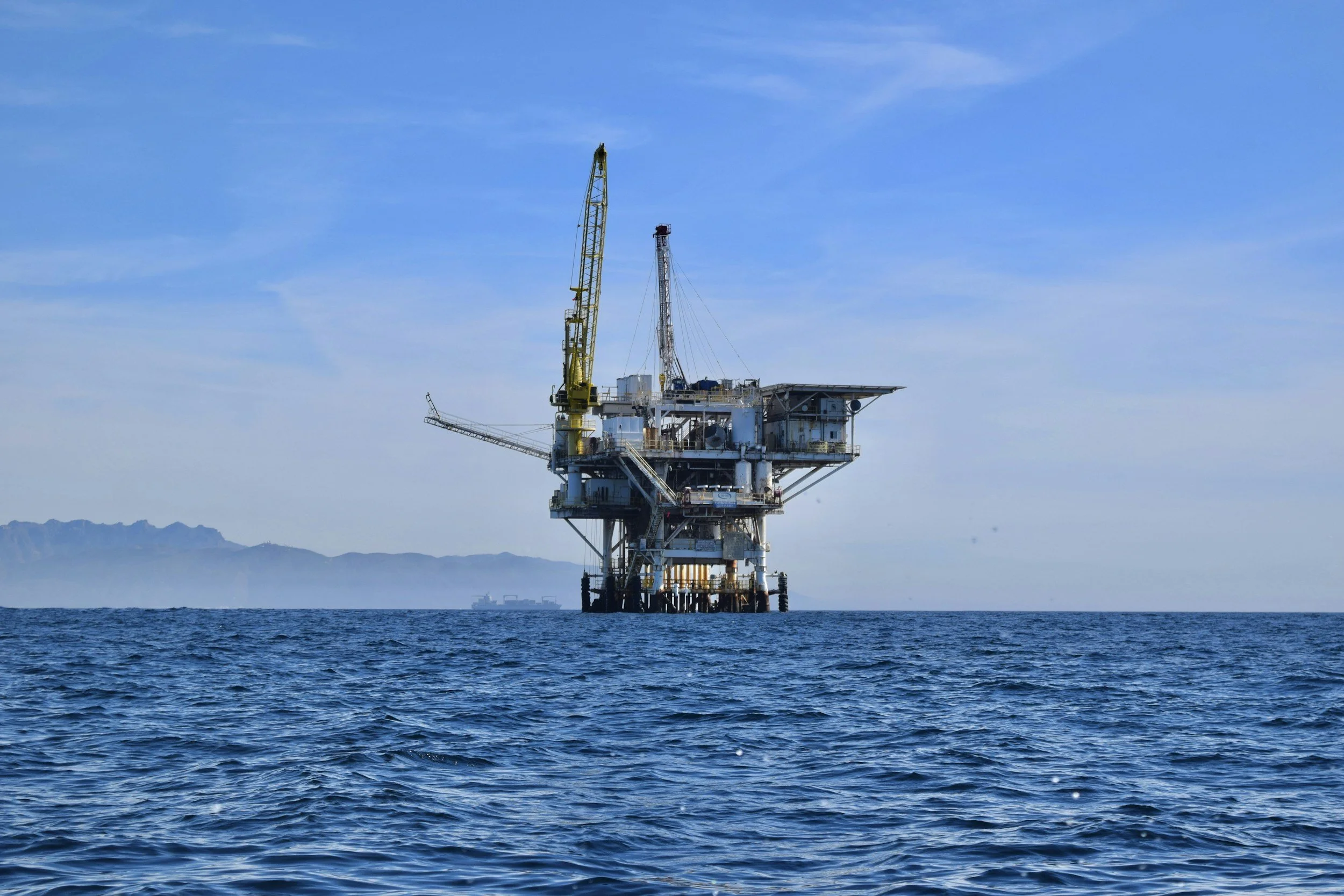
Deepwater drilling: Offshore platforms drill through thousands of feet of ocean water and then thousands more feet of rock to reach reserves beneath the seafloor. It's technically demanding and carries higher failure consequences, the 2010 Deepwater Horizon spill in the Gulf of Mexico being the starkest example.
Oil sands extraction: Used mainly in Alberta, Canada, this targets bitumen, an extremely thick, heavy form of crude mixed into sand near the surface. Shallow deposits get strip mined and washed with hot water to separate the bitumen; deeper deposits use steam injected underground to thin the bitumen enough to pump out. Both routes require substantially more energy and water than conventional drilling, which is why oil sands crude generally carries a higher emissions footprint per barrel before it's even burned.
Comparing Fossil Fuel Emissions
Burning these fuels for energy doesn't produce equal amounts of carbon dioxide, even when you control for how much energy you get out of them. According to the US Energy Information Administration, burning coal for electricity produces about 209 pounds of CO2 per million British thermal units of energy, compared with 117 pounds for natural gas, with petroleum falling in between. Natural gas is mostly methane, a relatively simple molecule that burns more completely and with less leftover carbon than coal's more complex structure, which is the main reason for the gap.
There's a wrinkle in that "cleaner fuel" framing, though, and it works on two levels. The first is scale: the International Energy Agency's 2026 Global Energy Review found that natural gas was the single largest contributor to the global rise in energy-related CO2 emissions in 2025, ahead of both oil and coal, simply because consumption grew so much faster than the other two. Burning something cleaner per unit of energy doesn't reduce total emissions if you end up burning far more of it. The second is methane leakage. Before natural gas gets burned and produces CO2, it has to be extracted, transported, and stored, and at every step there are opportunities for raw methane to escape into the atmosphere. Methane that leaks unburned is a far more potent greenhouse gas than CO2 in the short term: the IPCC puts methane's warming impact at roughly 80 times that of CO2 over a 20-year window, dropping to about 30 times over 100 years as it breaks down. Even small leak rates during extraction and transport can erode a significant share of the climate advantage that natural gas holds over coal on paper.
What US Energy Policy Means for Emissions Right Now
A series of executive orders starting in January 2025 reoriented US energy policy around what the administration calls energy dominance: ending a pause on LNG export permits, directing federal agencies to speed up drilling and pipeline permitting, and launching an initiative to revive the coal industry. The results show up in the production numbers. US crude oil output hit a record above 13.6 million barrels a day in 2025, and natural gas production sits around 110 billion cubic feet a day, nearly matching Russia, Iran, and China combined.
Applying the emissions math from the previous section to those numbers is straightforward. More coal burned means more CO2 per unit of energy than any other fossil fuel. More natural gas at scale means more leakage risk, and the IEA confirmed last year that gas was the single largest contributor to global emissions growth in 2025. Record production doesn't change those fundamentals. The economic arguments for expanded fossil fuel output are real, but they don't alter the underlying physics of combustion or the atmospheric behavior of methane. Understanding what's being extracted, how it forms, and what it costs climatically is the difference between following energy policy and actually evaluating it.
Why This Vocabulary Matters
None of this requires you to personally evaluate a drilling permit or weigh in on LNG export policy. What it does give you is the ability to read an energy headline and know what's actually being described: whether a new well is conventional or fracked, whether a production record is about oil or gas specifically, and why a "cleaner" fuel can still drive emissions higher if enough of it gets burned and leaked. The science on what these fuels are, how they form, and what they cost climatically doesn't change based on who's in office or what the policy is called. That's precisely why it's the right starting point.
