
Regenerative Gardening at Home: Five Core Practices
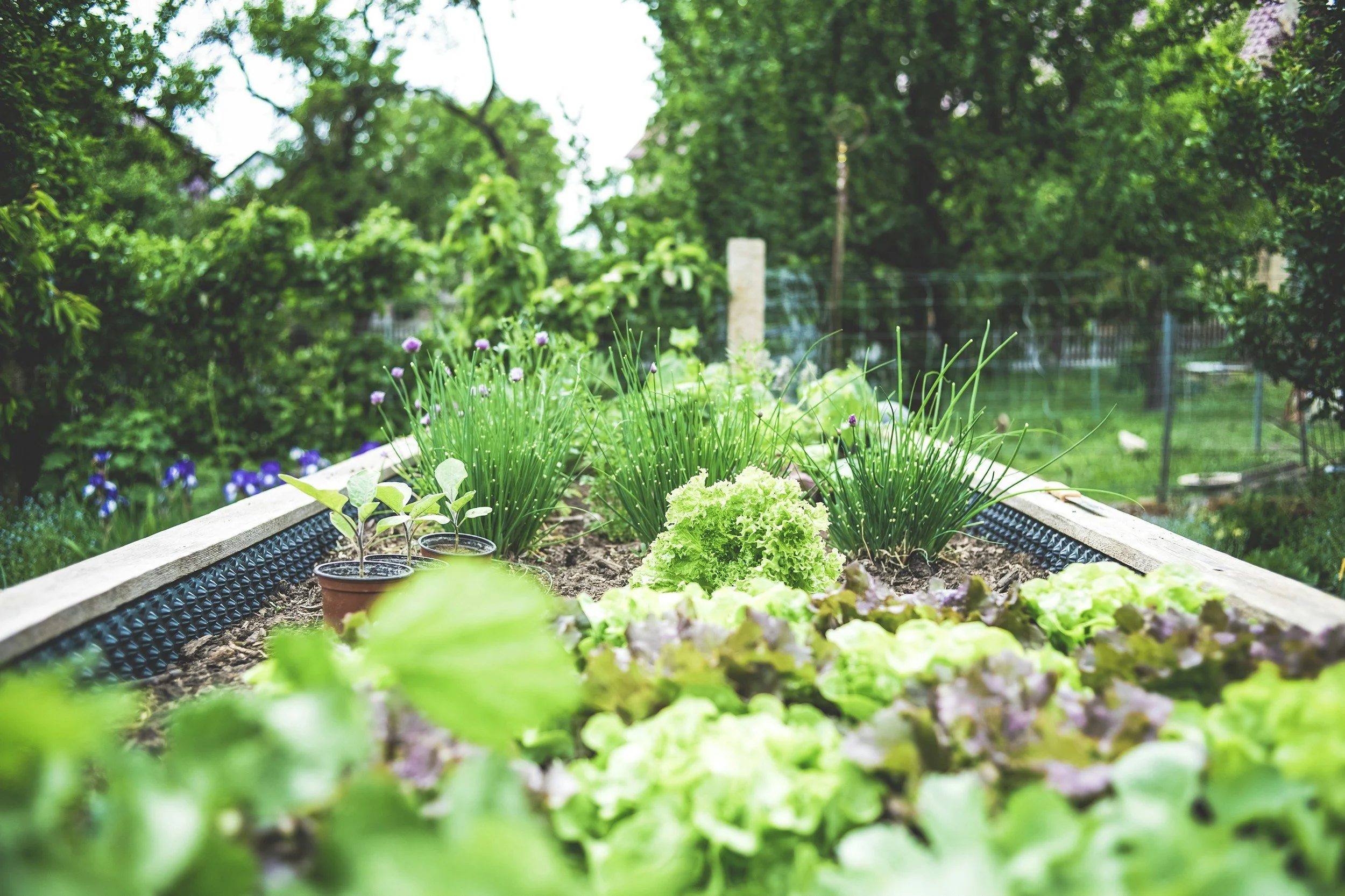
Regenerative agriculture usually gets discussed at the farm scale, acres of cover crops and rotational grazing, but the same principles apply just as well to a backyard garden, a few containers, or a patch of lawn. Practicing them at home builds a more grounded understanding of what regenerative farms are doing at scale, and why it matters.
A home version of regenerative gardening works with the same biological systems that make the farm-scale practice effective: soil microbes, plant diversity, and organic matter cycling, rather than recreating industrial equipment in miniature. None of it requires acres, expensive tools, or a formal certification, just an understanding of what soil biology needs. Five practices carry most of the weight: minimizing disturbance, keeping soil covered, building organic matter, growing diverse plants, and cycling nutrients on-site.
The payoff shows up close to home, not just in the abstract. Soil that holds its own moisture between waterings means fewer trips with the hose and a smaller water bill over a season. A wider mix of plants in the beds tends to mean fewer aphid outbreaks or fungal problems severe enough to reach for a spray bottle, since more pest control happens on its own through resident predatory insects. None of it shows up overnight, but by the second or third season, a garden built this way typically costs less to maintain.
The Soil Ecosystem in a Home Garden
Dig a spadeful of backyard soil that hasn't been heavily compacted, paved over, or treated with persistent pesticides, and there's a functioning ecosystem in that handful: organisms breaking down organic matter, moving nutrients between plants, and forming the aggregates that give soil its structure and water-holding capacity. None of that activity is visible from the surface, which is part of why it's easy to disrupt without noticing.
Most conventional lawn and garden practices disrupt this ecosystem invisibly: rototilling destroys fungal networks built up over years, synthetic fertilizers shrink microbial populations, and bare soil erodes in rain, bakes in heat, and loses the organic matter that feeds soil biology. Regenerative gardening works by removing these disruptions.
Minimizing Soil Disturbance in the Garden
Tilling and digging break apart mycorrhizal fungal networks, underground fungal threads that partner with plant roots and help them draw water and nutrients from a much wider area than roots alone reach. These networks take years to establish and are slow to rebuild once disturbed.
For a new bed in lawn or compacted soil, sheet mulching, also called the lasagna method, layers cardboard, compost, and mulch to smother existing vegetation and build a planting-ready bed without digging. For existing beds, no-dig gardening skips tillage entirely, adding compost to the surface and letting worms handle the incorporation, an approach documented extensively by gardeners like Charles Dowding.
Getting started:
New bed on lawn or compacted soil: layer cardboard, then 2 to 3 inches of compost, then mulch; plant into it after one season
Existing bed: add compost to the surface each season instead of digging it in
Transplanting or dividing: dig the narrowest hole the root ball needs
Keeping Garden Soil Covered
Bare soil is under constant stress: it compacts and erodes in rain, loses moisture in heat, and becomes hospitable to weed seeds, so keeping it covered is one of the more straightforward ways to protect soil biology.
A layer of wood chip mulch, straw, or shredded leaves insulates soil, retains moisture, moderates temperature, and slowly feeds soil biology as it breaks down, while cutting down on watering needs. Mulch is inexpensive relative to most garden inputs and often free through municipal drop-off programs, making it one of the more accessible starting points.
Living groundcovers go further than mulch alone: low-growing plants like clover or creeping thyme provide continuous root systems that support soil biology, fix nitrogen in the case of clover, and add habitat for beneficial insects.
Getting started:
Spread 2 to 4 inches of wood chips, straw, or shredded leaves over bare soil between plants
Shred fallen leaves with a mower and leave them on the lawn or in beds instead of bagging
Fill gaps between larger plants with a low groundcover like clover or creeping thyme
Building Organic Matter Through Compost
Organic matter feeds microbial communities, improves water retention, contributes to nutrient availability, and stores carbon. Compost is the central tool for building it at home, and it doesn't require precise ratios or specialized equipment; even a thin layer added to beds once or twice a year improves soil biology measurably. Composting is also one of the more effective ways to cut down on kitchen food waste rather than sending it to the curb.
Home composting is the lowest-cost entry point, but not the only one. Municipal compost programs and bagged compost certified by the US Composting Council work as substitutes, and consistent additions matter more than volume.
Getting started:
Start a pile with kitchen scraps and yard waste, turning it occasionally and keeping it moist
No yard for a pile: use a municipal drop-off program, or buy bagged compost with the USCC's Seal of Testing Assurance
Spread a thin layer of finished compost over garden beds once or twice a year
Where budget allows, mix worm castings into planting holes for an added biological boost
Growing Diverse Plants for Soil Health
Plant diversity above ground drives microbial diversity below ground. Different species have different root architectures, exude different chemical compounds, and support different fungal partnerships, so a single species of lawn grass, or a bed of one vegetable, supports a narrower microbial community than a mix of types. Mixing types, annuals with perennials, deep roots with shallow ones, matters more than mixing varieties within one species.
Flowering plants throughout a yard, not just in dedicated beds, provide habitat and food for pollinators, predatory insects, and other animals up the food chain. Native flowering plants are especially useful, since local insects and birds already have ecological relationships with them, and even a few provide meaningful habitat in an otherwise conventional yard. Allowing some areas to grow less uniformly, including longer grass patches or unmowed corners, supports insect populations most yard maintenance eliminates.
Getting started:
In each bed, mix plant types rather than one species alone: an annual next to a perennial, a deep root next to a shallow one
Add one or two native flowering plants to an existing bed, or a few culinary herbs if the goal is food as well as habitat
Let one corner or edge of the yard grow untrimmed for a season
Cycling Nutrients On-Site
Regenerative farming cycles nutrients within the farm rather than importing them continuously, and the same logic applies at home. Composting kitchen and yard waste returns nutrients to soil rather than sending them to a landfill, where organic matter decomposes anaerobically into methane, a potent greenhouse gas; a compost pile decomposes aerobically instead, producing carbon dioxide and stable organic matter.
Grasscycling, leaving clippings on the lawn after mowing, returns nitrogen to the soil, and despite a persistent myth, clippings break down too quickly to contribute to thatch buildup.
Avoiding synthetic fertilizers reduces dependence on external inputs and lets soil biology develop more naturally. Synthetic nitrogen can reduce microbial diversity over time by altering soil pH and nitrogen dynamics, while compost and organic amendments build fertility more slowly but produce more stable results.
Getting started:
Leave grass clippings on the lawn after mowing instead of bagging them
Route kitchen and yard waste into a compost pile or municipal program instead of the trash
Swap synthetic fertilizer for compost or organic amendments on part of the yard and compare results over a season
Regenerative Gardening in the Bigger Picture
Home-scale regenerative gardening has real limits. A single yard cannot move the needle on climate change the way millions of acres of farmland under regenerative management could, and framing it as a climate solution overstates its reach. Its value lies in the health of one piece of land and the insects, birds, and stormwater it supports.
One practice is enough to start. Mulch over bare beds costs little and shows fast results. Composting kitchen scraps works in most living situations. A native flowering plant or two provides habitat local insects find quickly. Starting with one beats attempting all five at once.
